
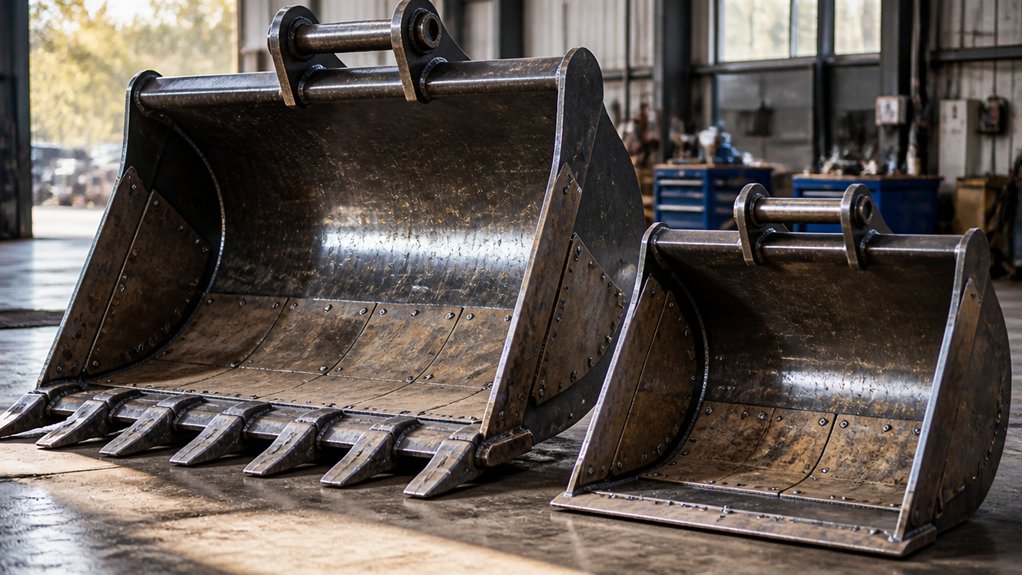
Wear plate is replaceable steel fitted to a bucket’s floor, sidewalls, or heel to slow abrasion and protect the bucket shell. Abrasion is material loss caused by sliding or rubbing contact; it can thin the shell even when the cutting edge remains serviceable.
The plate material and layout should match the bucket design and the material being handled. For example, highly abrasive rock may call for abrasion-resistant steel, while lighter-duty work may not justify added plate. The steel grade, plate thickness, and attachment method should be specified against the bucket maker’s drawings and the plate manufacturer’s data.
A fabricator’s brief should mark each plate’s location, outline, thickness, grade, and weld requirements. It should also identify any clearances needed for teeth, adapters, and other bucket parts. Added plate changes the bucket’s weight and internal shape, so excessive coverage can reduce capacity, interfere with material flow, or increase stress on the shell and welds. Check the finished bucket against the drawing for plate placement, fit, and weld quality.
What Does Bucket Wear Plate Protect?
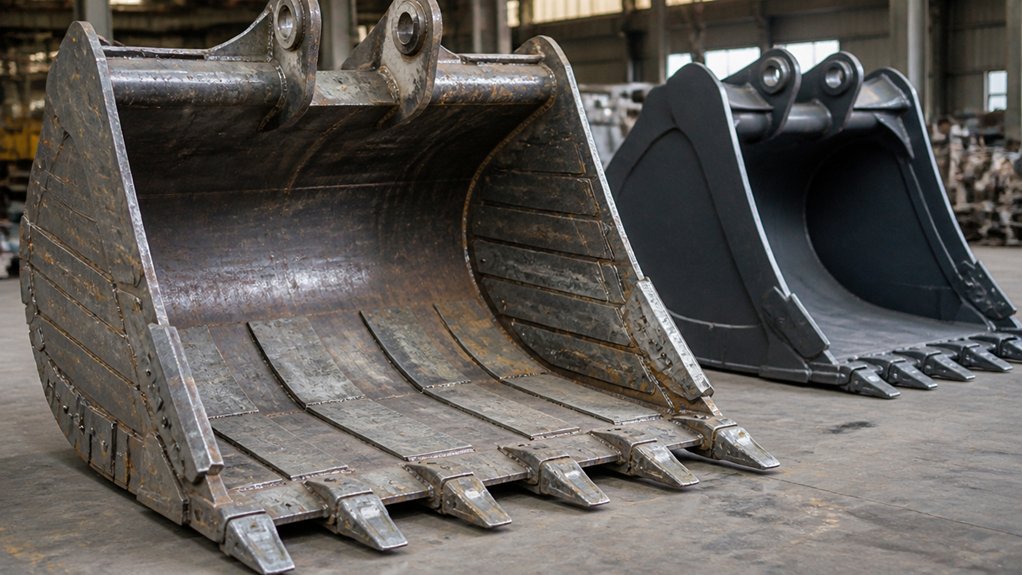
A bucket wear plate protects the bucket shell from abrasion and impact by acting as a replaceable layer between the shell and the material being handled. Abrasion is wear caused by rubbing or scraping; impact is damage from material striking the bucket. Without protection, rock, gravel, and debris can thin the shell, gouge its surface, or contribute to cracks.
Wear plates are commonly made from abrasion-resistant steel, such as an AR-grade plate, and attached by welding or bolting. The plate takes wear before the bucket’s structural steel, which can help preserve the shell’s shape and load-carrying capacity and reduce repair work. The best placement depends on where material slides or strikes the bucket during digging, loading, and dumping.
Specify the plate material, thickness, size, and attachment method based on the material handled, impact severity, bucket design, and operating conditions. Thicker or harder plate isn’t automatically better: added weight can reduce useful payload, and a mismatch in hardness or attachment can complicate repairs. A fabrication drawing should identify the protected areas and show plate edges, welds or bolt locations, and any clearances needed to avoid interference with the bucket’s operation.
Where Should Wear Plate Go on a Bucket?
Place wear plate on the bucket’s cutting edge, lower outside side plates, heel, floor, and lower interior sidewalls where abrasion or impact is concentrated. The right locations depend on the material being handled, the loading method, and the wear pattern visible during inspection.
For the cutting edge, specify abrasion-resistant steel plate and keep it clear of teeth and adapters, which may need replacement. On the outside, focus on the lower side plates and corners that contact the ground. Add interior plate to the floor or sidewalls when sliding material wears those surfaces. Abrasion-resistant steel is designed to resist wear; the required grade and thickness depend on the material, impact level, and bucket design.
Describe each plate’s location and dimensions in the fabrication drawing, giving inches with millimetres in brackets. Specify the steel grade, plate thickness, edge details, and weld requirements. A weld is a fused joint between metal parts; its size and procedure should follow the bucket manufacturer’s guidance and applicable welding requirements.
Ask the fabricator to check that plates sit flush, don’t obstruct material flow, and leave teeth, adapters, and moving parts accessible. Added plate weight, fit-up, welding access, and repair needs also affect the design.
How Do Bucket Design and Job Conditions Affect Placement?
Place wear plate on the bucket surfaces that contact abrasive material, while keeping the cutting path, teeth, adapters, and hinge points clear. Wear plate is an added layer of abrasion-resistant steel; its grade and thickness should suit the bucket’s base metal, the expected wear, and the attachment method.
For a wide loader bucket, assess the cutting edge and lower side plates. A narrow excavator bucket often needs protection at the lip, corners, and side cutters. Curved shells, seams, and existing reinforcements affect fit and load transfer, so the drawing should show plate boundaries, weld locations, and clearances. Specify the steel grade and thickness from the plate manufacturer’s data, and confirm that the proposed welding procedure is compatible with both the plate and bucket steel.
Job conditions determine which areas need protection. Rock and demolition debris can cause impact as well as abrasion; abrasive sand wears surfaces through repeated contact, while loose soil or clay may produce less wear. The operating angle, material flow, and cycle frequency also affect wear patterns. Base the placement plan on the bucket’s task and material, then check high-wear areas during service and revise the drawing if those conditions change.
How Do You Choose Wear Plate Without Adding Excess Weight or Cost?
Choose wear plate thickness and hardness by mapping where abrasion and impact occur, then reinforce only those zones. Review bucket inspection records and operating conditions to identify where metal loss is fastest. Abrasion is surface wear from material rubbing against the plate; impact is damage from repeated blows. The balance between them determines which plate properties matter most.
Specify a harder plate for high-abrasion areas, such as the cutting edge, heel, and side corners. For areas exposed to heavy impact, compare the plate’s toughness—its ability to resist cracking—with its hardness. The right grade depends on the material handled and how it loads the bucket. Have the fabricator document the proposed grade and thickness for each wear zone, rather than specifying one plate across the entire bucket.
Check the added plate mass against the machine’s payload, stability, and structural limits. More coverage or thicker plate can increase fuel use and stress on the bucket, while thinner plate may need more frequent replacement. Compare estimated service life and replacement labor as well as material use; these factors drive the total cost.
Frequently Asked Questions
How Can You Tell When Bucket Wear Plate Needs Replacement?
Replace a bucket wear plate when it reaches the equipment manufacturer’s minimum allowable thickness, develops a through-crack or hole, or no longer protects the bucket structure. The minimum thickness depends on the bucket design and the plate material, so check the manufacturer’s service manual or maintenance guidance rather than applying a universal limit.
During inspection, look for uneven thinning, cracks, holes, failed welds, and any exposed or deformed bucket steel. A failed weld is one that has separated enough to let the plate move or lift away from the bucket. Compare worn areas with an unworn section of the same plate, and measure thickness with a suitable thickness gauge; record the location and result for maintenance planning.
Replacement timing also depends on the material being handled, impact and abrasion, and the consequences of a plate failure. A crack or loose plate may need prompt repair even when much of the plate remains thick, because movement can damage the bucket or create a safety risk. If the manufacturer does not specify a wear limit, have a qualified engineer assess the remaining thickness and the bucket’s structural condition before deciding whether to replace the plate.
Can Worn Wear Plate Be Repaired Instead of Replaced?
Yes, a worn wear plate can be repaired if the damage is localized and the steel beneath it is sound. The decision depends on the plate’s grade, remaining thickness, crack extent, and service conditions, including impact and abrasion.
A fabricator can remove damaged material and build it back up with compatible weld metal, or weld on a matching wear-plate patch. The repair plan should identify the plate grade and filler metal, and account for the steel’s weldability; some abrasion-resistant grades require controlled preheating or other procedures to limit cracking. The plate manufacturer’s welding guidance should take precedence.
Replace the plate if cracks extend into the supporting structure, wear is widespread, or too little sound base metal remains for a reliable weld. Before approving the work, specify how the fabricator will inspect for cracks, restore the required profile and thickness, and verify that the repair will not interfere with fit or operation.
What Welding Practices Help Prevent Wear Plate Cracking?
Prevent wear plate cracking by following the plate manufacturer’s welding procedure for preheat, heat input, filler metal and cooling. The right procedure depends on the wear plate grade and thickness, the base metal, joint design and welding process.
Before welding, remove moisture, oil, rust and other contaminants from the joint area. Preheat only when the manufacturer’s instructions or a qualified welding procedure require it; preheat reduces temperature differences that can contribute to cracking. Control heat input—the energy delivered by the welding process—so the plate is not overheated. Use filler metal compatible with both the wear plate and the base metal, as specified by the procedure.
For thick or restrained joints, a balanced weld sequence can limit uneven shrinkage and residual stress. Avoid rapid cooling when the procedure calls for slower cooling, but do not apply an improvised heating method. After welding, inspect the weld and adjacent heat-affected zone, the area whose properties may have changed due to welding heat. Set inspection methods and acceptance criteria in the job specification, based on the plate manufacturer’s guidance and the applicable welding code.
How Often Should Bucket Wear Plate Be Inspected?
Inspect bucket wear plates daily during routine checks, and conduct a detailed inspection weekly or after a severe impact. A wear plate is a replaceable layer that protects the bucket shell from abrasion and impact.
Check for cracks, loose fasteners, lifted edges, and areas worn through to the shell. Abrasive material, such as rock or slag, can wear a plate faster than soil, so inspection frequency should reflect the material handled and the hours the bucket is in use. After an impact, inspect the plate and its attachment points for damage that may not be visible during routine checks.
Replace a plate before wear exposes the bucket shell. The replacement’s material grade, thickness, and attachment method should suit the bucket design and working conditions. Follow the bucket manufacturer’s inspection and replacement guidance; if it is unavailable, have a qualified equipment inspector assess the plate and shell.
Does Wear Plate Installation Affect a Bucket’s Warranty?
Adding a wear plate can affect a bucket’s warranty if the work changes the bucket’s structure or conflicts with the manufacturer’s warranty terms. A wear plate is an extra layer of abrasion-resistant steel attached to protect the bucket from wear; welding it on can alter the base metal or affect nearby welds.
The effect depends on the bucket manufacturer’s terms, the plate material and thickness, and the attachment method. Before work begins, check whether the warranty requires approved materials, a specified welding procedure, or written authorization. A welding procedure is a documented set of instructions for making a weld, including the process and materials.
For a fabrication brief, identify the plate’s grade and thickness, its location, and whether it will be attached by welding or bolting. For welded plate, ask the fabricator to specify the welding process and filler metal, and to note any precautions for the bucket’s base material. Keep the manufacturer’s written guidance, material records, drawings, and installation documentation with the warranty file.