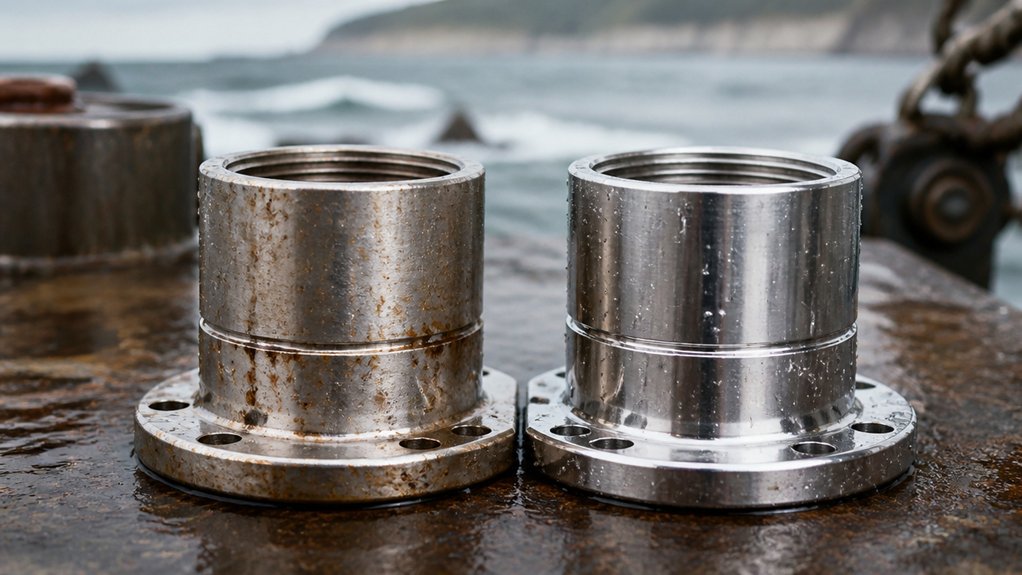
316 stainless steel is worth specifying over 304 when chloride exposure or aggressive cleaning makes corrosion-related maintenance or replacement a serious risk. Chlorides are salts found in seawater, road spray, and some cleaning products; they can cause pitting, or small, deep holes, in 304. Molybdenum, an alloying element in 316, improves resistance to this type of corrosion, but does not make the grade immune.
The choice depends on the part’s environment, cleaning routine, and expected service life. For a hinge, for example, consider whether it will face salt spray, chemical cleaners, trapped moisture, or frequent washdowns, and whether corrosion could interrupt production or compromise the assembly. In mild indoor conditions, 304 may be adequate; in chloride-rich or chemically aggressive conditions, 316 may reduce maintenance and replacement needs.
When briefing a fabricator, identify the stainless grade on the drawing or purchase specification rather than relying on a general description such as “stainless steel.” Also state the exposure and cleaning method, and check that the material certificate identifies the supplied grade. Fabrication details matter too: heat tint, or the colored oxide left by welding, and embedded carbon-steel particles can undermine corrosion resistance if they are not properly removed.
304 vs. 316 Stainless Steel: Quick Verdict
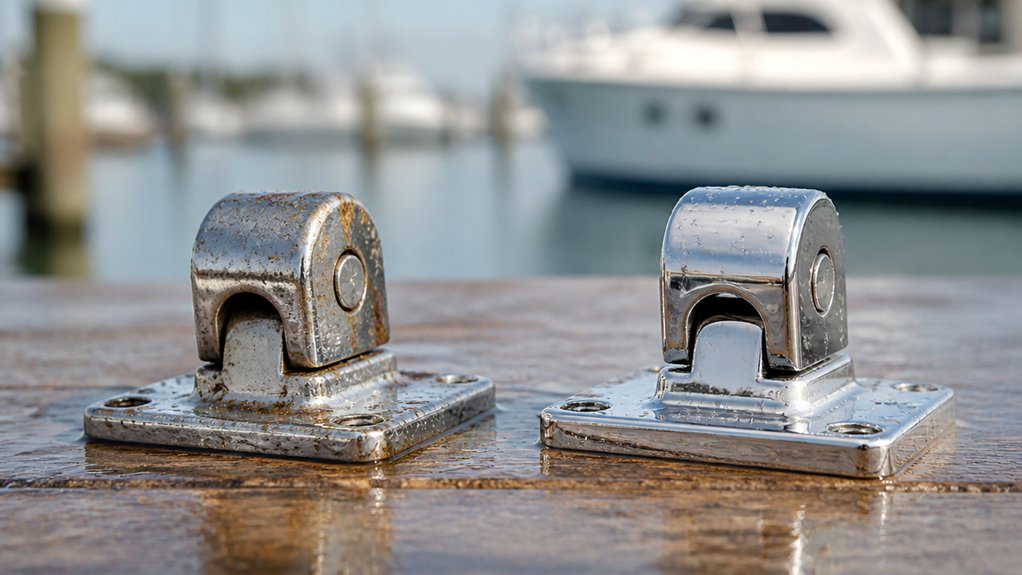
Choose 304 stainless steel for most indoor, dry, and mildly corrosive environments; choose 316 when exposure to chlorides or other aggressive chemicals makes its added corrosion resistance important. Stainless steel is an iron-based alloy that resists rust, and 304 and 316 are its common grades. Grade 316 contains molybdenum, an alloying element that improves resistance to chloride corrosion, such as from saltwater or de-icing salts.
For a fabrication brief, specify the grade, the product form, and the environment the part will face. Include whether the part will be welded, formed, or exposed to cleaning chemicals, because fabrication and service conditions can affect material selection. If the part will be welded, identify the welding process and any requirements for cleaning or passivation, a treatment that helps restore the steel’s protective surface after fabrication.
Compare the grades against the part’s expected service life, maintenance needs, and exposure—not appearance alone. Both can provide a clean finish, but neither grade is a substitute for specifying the surface finish or checking that the chosen material meets applicable drawings and standards. Ask suppliers to document the grade and confirm that the delivered material matches the specification.
304 vs. 316: Corrosion Resistance
316 stainless steel is more resistant to chloride corrosion than 304, but there’s no reliable percentage that applies to every job. Both grades contain chromium and nickel; 316 also contains molybdenum, which helps protect against pitting and crevice corrosion.
Pitting is localized damage that forms small holes. Crevice corrosion occurs in tight gaps where moisture and chlorides can collect, such as under fasteners or at overlapping joints. Grade 304 may resist general corrosion in mild conditions, but chloride exposure can damage its protective surface film more readily. Neither grade is immune to corrosion.
For a fabrication brief, identify the chloride source, concentration, temperature, exposure time, and whether the part will be cleaned or exposed to stagnant liquid. Also specify the surface finish and joint details, since rough surfaces and narrow gaps can increase corrosion risk. The choice between 304 and 316 depends on these service conditions and the consequences of maintenance or replacement.
Where 304 and 316 Stainless Steel Work Best
304 stainless steel suits dry indoor equipment and routine food-service surfaces; 316 is usually the better choice where salt or chlorides can reach the metal. Chlorides are salts found in seawater, deicing salts and some cleaning products. They can cause pitting, or small, localized holes, in stainless steel.
For indoor frames, cabinets, counters and general-purpose tanks, 304 often provides adequate corrosion resistance. Use 316 for coastal fixtures, marine fittings, equipment exposed to road spray, or process parts that contact chloride solutions. The right grade also depends on chloride concentration, temperature, how often the part is cleaned, and whether chemicals remain on its surface.
When briefing a fabricator, identify the exposure for each part rather than specifying one grade for the whole assembly. Check that weld filler metal, fasteners and adjacent metals are compatible with the selected grade; mismatches can create corrosion-prone areas. Compare the expected service life and maintenance needs of each option, since more demanding exposure can make 316’s added corrosion resistance worthwhile.
When 316 Stainless Steel Is Worth the Upgrade
Choose 316 stainless steel over 304 when chloride exposure makes corrosion risk costly to manage. Chlorides are salts found in seawater, deicing products, and some process fluids. Molybdenum in 316 improves resistance to pitting, or localized holes, and crevice corrosion, which can develop in tight gaps.
That added resistance doesn’t make 316 immune to corrosion. Deposits, stagnant liquid, poor drainage, and inadequate cleaning can still damage either grade. The better choice depends on chloride concentration, temperature, exposure duration, surface finish, and cleaning method.
For a fabricated part, specify the stainless grade on the drawing and identify surfaces exposed to chlorides. Also state the required finish and any cleaning or passivation requirements. Passivation is a chemical treatment that removes free iron from the surface and supports the stainless steel’s protective oxide layer.
For intermittent salt contact, compare 316’s added material cost with the expected maintenance and replacement costs before specifying it. For continuous or severe exposure, 316 may reduce corrosion-related downtime, but the design and fabrication details still matter. Ask the fabricator to document the material grade and follow suitable procedures for cutting, welding, and finishing.
Cost, Maintenance, and Service Life
Grade 304 usually has lower material cost and suits many indoor applications, while grade 316 can reduce the risk of corrosion-related repairs or replacement in chloride-rich or chemical environments. The better lifecycle choice depends on the part’s exposure, cleaning access, downtime consequences, and expected service life—not purchase price alone.
Choose between 304 and 316 based on exposure, maintenance needs, downtime, and service life—not material cost alone.
Grade 316 contains molybdenum, which improves resistance to chloride corrosion compared with 304. Chlorides are salts found in coastal air, de-icing residue, and some process fluids. Specify 316 when the service environment justifies that added resistance; for mild indoor exposure, 304 may meet requirements without paying for a higher grade.
Set cleaning and inspection requirements for the actual operating conditions. Rinse salt deposits, remove process contaminants, and check welds, crevices, and damaged finishes on both grades. Crevices are narrow gaps where moisture and contaminants can collect. Grade 316 isn’t maintenance-free: stagnant chloride solutions and poor cleaning can still cause corrosion.
When reviewing a fabrication quote or maintenance plan, identify the stainless steel grade, surface finish, weld locations, and cleaning method. Track labor, cleaning materials, repairs, and replacement intervals to compare lifecycle costs. The result depends on exposure and operating demands, so avoid specifying a more corrosion-resistant grade unless the service conditions require it.
Frequently Asked Questions
Are 304 and 316 Stainless Steel Magnetic?
Type 304 and 316 stainless steel are usually nonmagnetic in the annealed condition, but fabrication can make them slightly magnetic. Annealing is heat treatment used to soften metal and relieve stress. The magnetic response depends on the grade’s structure and how it has been processed.
Cold working—shaping metal without heating it enough to soften it—can form some magnetic martensite in 304 and 316. This may happen during bending, drawing, or machining, especially in areas with substantial deformation. Welds can also show a magnetic response because their structure differs from the annealed base metal.
A magnet test cannot confirm whether stainless steel is 304 or 316, or establish its corrosion resistance. For purchasing and inspection, check the material certificate and specify the grade and required condition. If magnetic behavior matters to the application, state that requirement separately and have it verified with an appropriate test; the acceptable result depends on the part’s use and fabrication history.
Can 304 and 316 Stainless Steel Be Welded?
Yes. Type 304 and Type 316 stainless steel can be welded to the same or to each other with gas tungsten arc welding (TIG), gas metal arc welding (MIG), or shielded metal arc welding (stick), if the joint design and procedure suit the part.
For a 304-to-304 joint, ER308L filler metal is commonly specified; for 316-to-316, ER316L is common. For a 304-to-316 joint, ER316L is often used. These are American Welding Society (AWS) filler classifications; the drawing, applicable welding code, and corrosion requirements should determine the final choice. “L” denotes a low-carbon filler, which helps reduce the risk of corrosion near the weld.
The right process depends on material thickness, joint access, production volume, appearance, and service conditions. Thin sheet may need tighter heat control to limit distortion and burn-through. Excessive heat can also reduce corrosion resistance in the heat-affected zone, the area next to the weld that changes during heating.
Specify the stainless grades, filler classification, joint requirements, and applicable welding procedure on the drawing or purchase documents. Require removal of heat tint and weld contamination when corrosion performance matters; the cleaning method should suit the alloy and service environment.
How Can I Identify 304 Versus 316 Stainless Steel?
Appearance alone cannot reliably distinguish 304 from 316 stainless steel. Both are austenitic stainless steels, a family of steels that is generally nonmagnetic in the annealed condition, so color and a magnet are not dependable identification methods.
Start by checking the material certificate or purchase records for the grade and heat number, a code that links the material to its production batch. Markings on the part can help, but they may be missing or inaccurate. For incoming material or finished parts, use a molybdenum spot test, a chemical test that can indicate whether the steel contains molybdenum, or X-ray fluorescence (XRF), a method that measures the metal’s elemental composition. A spot test can screen for 316; XRF can distinguish the grades by checking for molybdenum.
The right check depends on the part’s value, traceability requirements, and whether testing may damage or contaminate its surface. For critical components, specify the grade on the drawing or purchase order and require a material certificate linked to the heat number. Use independent testing when documentation is missing or the consequences of a wrong grade are significant.
Are 304 and 316 Stainless Steel Food-Safe?
Both 304 and 316 stainless steel can be suitable for food-contact equipment, but the grade alone does not establish that a finished product is safe. Food-contact requirements depend on the intended food, temperature, exposure time, cleaning method and applicable regulations.
Grade 304 is a common choice for food equipment exposed to ordinary cleaning and mild food acids. Grade 316 contains molybdenum, an alloying element that improves resistance to corrosion from salt and some acids. That can make 316 a better fit for salty foods, brines or more aggressive cleaning chemicals, but it does not make the material immune to corrosion.
When specifying sheet, plate, tubing or welded assemblies, identify the stainless grade and the required surface finish. A rough or damaged surface, poorly finished welds, crevices and residue can make cleaning harder and increase corrosion risk, regardless of grade. Ask the supplier for material certification and documentation showing that the finished product meets the food-contact rules that apply to its use. Also confirm that the cleaning chemicals and procedures are compatible with the selected grade and finish.
Can Stainless Steel Grades 304 and 316 Be Recycled?
Yes. Both 304 and 316 stainless steel can be recycled through established scrap-metal processes, including sorting, melting, and refining.
Keep the grades separate when possible. Grade 304 contains chromium and nickel; grade 316 also contains molybdenum, which improves resistance to corrosion in some environments. Mixing the grades can make the recovered metal harder to identify and may reduce its value or limit its use in new products.
For a fabrication project, ask the supplier or recycler how they identify and segregate stainless scrap, especially offcuts, swarf (small metal chips from machining), and parts with coatings or attached materials. Recycling options depend on the scrap’s cleanliness, form, quantity, and local facility capabilities. Remove nonmetal attachments where practical, and label scrap by grade when its identity is known.