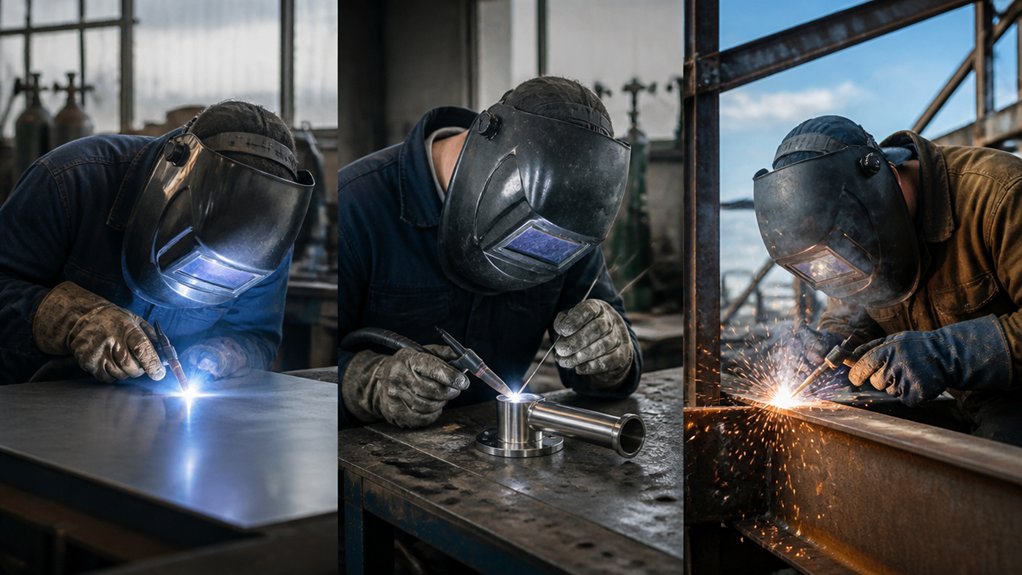
MIG welding suits clean, repeatable seams; TIG welding suits work that needs precise control or a clean finish; and Stick welding suits outdoor repairs and heavy steel. The right choice depends on the metal and its thickness, joint access, production rate, appearance requirements, and inspection criteria.
MIG, or gas metal arc welding, feeds a wire electrode through a gun and uses shielding gas to protect the weld. It is often a practical choice for carbon steel, stainless steel, and aluminum in production, especially when parts are clean and joints are accessible. Ask the fabricator to state the base-metal grade, wire classification, shielding gas, and required weld size on the drawing or work order.
TIG, or gas tungsten arc welding, uses a nonconsumable tungsten electrode and may use a separate filler rod. It offers close control on thin sheet and visible joints in stainless steel or aluminum, but usually takes longer than MIG. Stick, or shielded metal arc welding, uses a flux-coated rod that creates its own protective gas and slag. It can suit carbon-steel repairs and outdoor work, but slag removal and operator access affect the finished result. Specify the joint, weld location, finish, and inspection method so the process can be checked against the job requirements.
Choose the Right Welding Process for Your Job
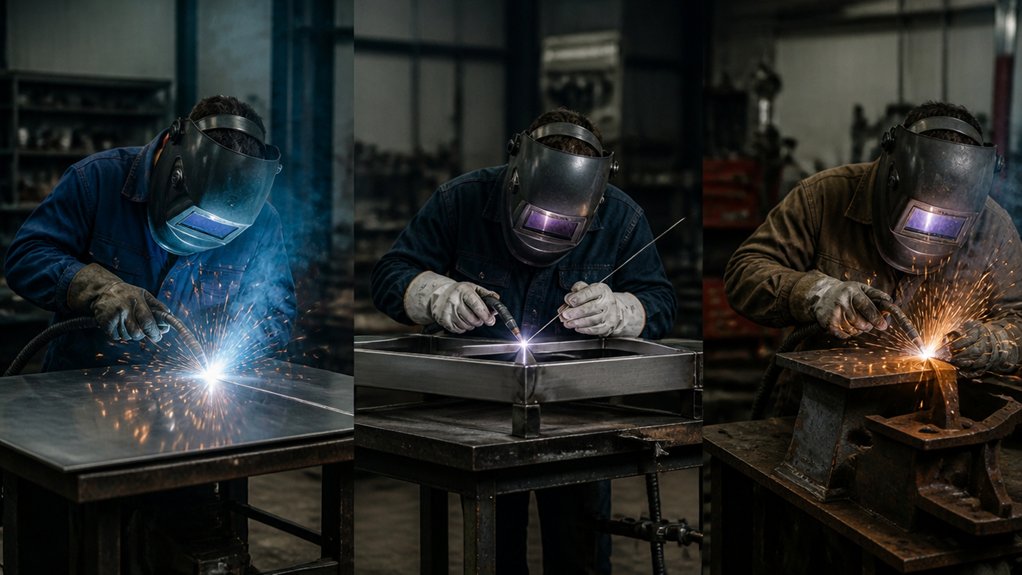
Choose a welding process by matching the joint, metal, thickness, production volume, and work environment. For example, gas metal arc welding (GMAW), often called MIG welding, suits many repeat jobs on carbon steel, stainless steel, and aluminum when the parts can be kept clean and shielded from drafts. Gas tungsten arc welding (GTAW), or TIG welding, offers precise control for thin sheet, visible seams, and materials that need careful heat management, but it’s generally slower.
Shielded metal arc welding (SMAW), commonly called stick welding, uses a flux-coated electrode and doesn’t rely on an external shielding-gas supply. That makes it useful for outdoor repairs or sites where wind can disrupt gas shielding. The best choice still depends on the base metal, joint design, access, required appearance, and whether the work is indoors or outdoors.
When briefing a fabricator, specify the material and grade, thickness, joint locations, required strength, finish, and inspection needs. State whether the parts are prototypes, repairs, or repeat production, and describe any limits on distortion or cleanup. Ask how the proposed process will handle fit-up, fixtures, and access, and request a sample weld or documented procedure when consistency matters. Check that the finished weld matches the agreed drawing and acceptance criteria.
Use MIG for Fast, Everyday Projects
MIG welding is often a practical choice for repeatable work on clean, closely fitted steel parts, especially when long seams or steady production matter. MIG, or gas metal arc welding, feeds a wire electrode continuously through the welding gun; the wire forms the arc and supplies filler metal. This reduces stops for electrode changes compared with stick welding.
For a production brief, name the base metal and grade, material thickness, joint design, weld location, and required inspection. For example, specify whether the parts are mild steel, stainless steel, or aluminum; the correct wire, shielding gas, and procedure depend on that choice and on the thickness and joint. Include the required weld size and applicable drawing or welding standard rather than assuming one setting fits every part.
Ask the fabricator to confirm wire type, shielding gas, voltage, wire-feed speed, and travel speed for the specified material and joint. Voltage is the electrical force that helps control arc length; wire-feed speed sets how quickly filler wire enters the arc. Check that parts are clamped securely, fit-up is consistent, and welds meet the drawing’s acceptance criteria. Aluminum may require a spool gun, which feeds soft wire from a small spool near the gun to reduce feeding problems. Cost depends on weld length, joint access, material, setup, and inspection requirements.
Choose TIG for Precision and Clean Finishes
Tungsten inert gas (TIG) welding suits thin stainless steel, aluminum, and other jobs where control of heat and bead appearance matters more than production speed. The welder controls the arc with a torch and adds filler metal by hand when the joint needs it. This makes TIG useful for visible seams, detailed joints, and parts that could distort under excess heat.
When preparing a job brief, specify the base metal and grade, material thickness, joint design, and which welds will remain visible. Ask the fabricator to confirm the filler metal and shielding gas for the material, joint, and service conditions. Shielding gas protects the hot weld area from contamination; the correct choice depends on the base metal and welding procedure.
For inspection, agree on the required bead appearance and acceptance criteria before production. Check that the weld is continuous where specified and that the part has no visible contamination, undercut, or distortion that affects fit or function. TIG usually produces less spatter than processes such as flux-cored arc welding, but it can take longer; cost depends on access, joint complexity, material, and inspection requirements.
Use Stick for Outdoor Jobs and Thick Metal
Stick welding, formally called shielded metal arc welding (SMAW), suits outdoor work and thick carbon steel when wind or site access makes gas-shielded processes difficult. Its flux-coated electrode creates a gas shield around the arc, so the process doesn’t need a separate shielding-gas supply. Wind can still affect weld quality, and the work area must meet applicable safety requirements.
For a fabrication brief, identify the steel grade, thickness, joint design, welding position, and inspection requirements. The electrode type must match the base metal and service conditions; the welding procedure should also specify how many passes are needed. A pass is one layer of deposited weld metal. Multiple passes can join thick sections, but the required sequence depends on the joint and the approved welding procedure.
Ask the fabricator to document the welding procedure and electrode selection, and to state how slag—the solid residue left by the flux—will be removed between passes. Check that the inspection method matches the job’s drawings and applicable code. SMAW requires electrode changes and consistent arc control, so labor, access, position, and inspection requirements can affect production time.
Compare Cost, Materials, and Working Conditions
Compare MIG, TIG, and Stick welding by weighing labor, consumables, material fit, and job conditions—not just equipment cost. MIG (gas metal arc welding, or GMAW) can reduce labor on repeatable steel or aluminum work because wire feeds continuously. TIG (gas tungsten arc welding, or GTAW) gives the operator precise control, but usually takes more time. Stick (shielded metal arc welding, or SMAW) uses coated electrodes and needs no external shielding gas, which can simplify repair work.
For a brief, identify the base metal, its grade and thickness, the joint design, and the required finish. MIG suits many carbon-steel and aluminum jobs when the wire, shielding gas, and joint are specified for the material. TIG can suit thin sections and specialty alloys where heat and weld appearance need close control. Stick is often practical for thicker carbon steel and surfaces that are less clean, but surface condition and electrode choice still affect weld quality.
State whether work will be done indoors or outdoors. Wind can disturb the shielding gas used by MIG and TIG; Stick is less affected because its electrode coating produces shielding. Compare process-specific labor, wire or electrodes, gas, preparation, rework, and downtime. In the purchase specification, name the welding process and acceptance criteria, and require the fabricator to document any approved process change.
Frequently Asked Questions
What Safety Equipment Should Welders Wear?
Welders should wear a correctly shaded welding helmet, safety glasses, flame-resistant clothing, leather gloves, and protective boots. The right combination depends on the welding process, materials, work position, and hazards such as sparks, ultraviolet radiation, heat, and fumes.
Choose the helmet lens shade for the process and welding current, following the equipment manufacturer’s guidance and applicable safety requirements. Safety glasses with side shields protect against flying particles when the helmet is raised; they do not replace the helmet. Flame-resistant garments should cover exposed skin and resist sparks without melting. Gloves should suit the heat and dexterity demands of the task, while boots should protect feet from hot metal and falling objects.
Before work begins, check that each item fits, is intact, and is suitable for the planned job. Inspect helmets, lenses, gloves, clothing, and boots for cracks, holes, worn closures, or other damage. Replace damaged gear, and follow the manufacturer’s instructions for cleaning, storage, and maintenance. PPE, or personal protective equipment, reduces exposure but does not replace controls such as ventilation and screens that protect nearby workers from arc radiation.
Do Beginners Need Formal Welding Training?
Formal welding training is not required for every job, but it is important when weld quality affects safety, service life or compliance. For example, a buyer specifying a welded carbon-steel frame should identify the material grade, joint design, loading and applicable code so the fabricator can select a suitable process, such as gas metal arc welding (GMAW), and inspection plan.
Training helps welders recognize defects such as porosity, or gas pockets in the weld, and lack of fusion, where the weld metal does not properly join the base metal. These defects can weaken a joint or cause it to fail inspection. Hands-on instruction is especially useful for production work, where consistent results across repeated parts matter.
A welding certification is a documented qualification for a welder, process and position. Whether it is required depends on the governing code, contract and intended use of the part. Buyers and engineers should state those requirements in the drawing or purchase specification and ask for records that match the specified process and material.
How Should Welding Equipment Be Maintained?
Maintain welding equipment with scheduled inspections, cleaning, calibration, and prompt repairs. The inspection plan should match the process, such as gas metal arc welding (GMAW), and the equipment maker’s instructions.
Before production, check cables, connections, the welding gun, and the work clamp for damage or loose fittings. Clean dust and metal spatter from the power source and its ventilation openings as the manufacturer directs. Replace worn contact tips, nozzles, and liners; these consumables guide the wire and protect the weld area.
Calibration means checking that equipment settings match its displayed output. Arrange it when required by the equipment maker, a quality plan, or a customer specification. Record inspection dates, faults, repairs, and calibration results so production staff can trace changes in weld quality.
Check safety systems, including fume extraction, gas flow controls, and emergency stops, before use and at the intervals specified by the manufacturer. For robotic welding cells, inspect the torch, cables, fixtures, and guarding, and follow the robot and welding-system service schedules. Maintenance frequency depends on operating hours, process, environment, and the materials being welded. If welding is outsourced, define required maintenance records and equipment controls in the supplier’s quality requirements.
What Causes Weld Porosity, and How Can It Be Prevented?
Weld porosity is caused by gas trapped in the weld as the metal solidifies, often because of moisture, surface contamination, or inadequate shielding gas coverage. It can weaken a joint or create leak paths, so the acceptable level depends on the part’s function and the governing drawing or welding code.
For gas metal arc welding (GMAW) of carbon steel, oil, paint, rust, and moisture near the joint can release gas into the weld pool. Poorly fitted gas nozzles, drafts, incorrect gas flow, or leaks can let air reach the pool; excessive flow can also disrupt shielding. In gas tungsten arc welding (GTAW), contaminated filler metal or a dirty tungsten electrode can contribute to defects.
A production brief should identify the base-metal grade and thickness, welding process, joint design, and applicable acceptance standard. Ask the supplier to specify surface-preparation and shielding-gas controls, and to record any required inspection results. The appropriate gas, flow setting, cleaning method, and inspection depend on the material, joint, welding position, equipment, and code requirements.
How Should Finished Welds Be Inspected for Defects?
Inspect finished welds first by visual testing, then use nondestructive testing when the joint’s design, service conditions, or governing code requires checks for hidden flaws. Visual testing means examining the weld surface and nearby base metal for issues such as cracks, undercut, overlap, and visible porosity. Compare the weld with acceptance criteria specified in the drawing, purchase order, or applicable welding code; do not rely on appearance alone.
Choose additional testing to suit the material, joint, and likely defect. Liquid penetrant testing can reveal surface-breaking cracks in nonporous materials, while magnetic particle testing can find surface and near-surface flaws in ferromagnetic steel. Radiographic testing uses X-rays or gamma rays to show internal features, and ultrasonic testing uses sound waves to locate internal discontinuities. A qualified inspector should select the method and evaluate results under the applicable code or project specification.
Before production starts, define the required inspection method, acceptance criteria, and records with the fabricator. Record the weld location, inspection method, results, and any repairs. If testing finds porosity—small gas cavities in the weld metal—investigate causes such as contamination, moisture, or shielding-gas problems before approving repeat work. Capture and organize inspection images and reports so results remain traceable.