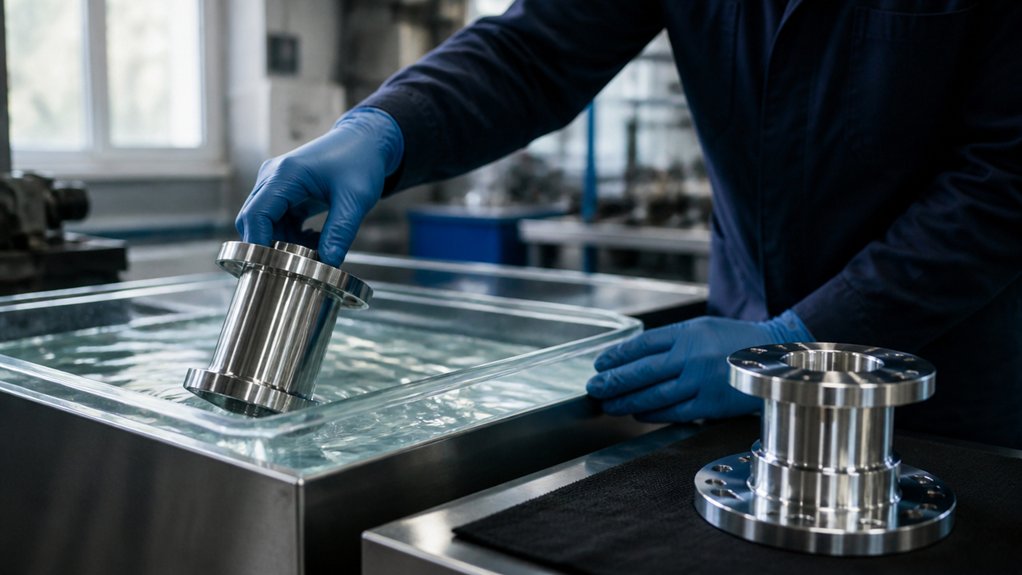
Passivation is a chemical treatment that removes free iron and other surface contaminants from stainless steel, helping its chromium-rich surface form a protective oxide film. It does not add a coating or repair pits, cracks, or damage caused by poor design.
Consider passivation after machining, grinding, or other work that may leave iron particles on a part’s surface. Welding can also change the surface, but passivation alone may not remove heat tint—the colored oxide left by welding. The required cleaning and treatment depend on the stainless steel grade, fabrication steps, and service conditions, such as exposure to salt, chemicals, or moisture.
When specifying the work, identify the alloy and grade, the operations performed, and the part’s intended environment. Ask the supplier to state the cleaning and passivation process and the applicable acceptance criteria. ASTM A967/A967M covers chemical passivation treatments for stainless steel parts and includes tests for checking surface cleanliness. Confirm that the selected process suits the alloy and part geometry; a treatment that works for one grade or fabrication history may not suit another.
What Passivation Does for Stainless Steel
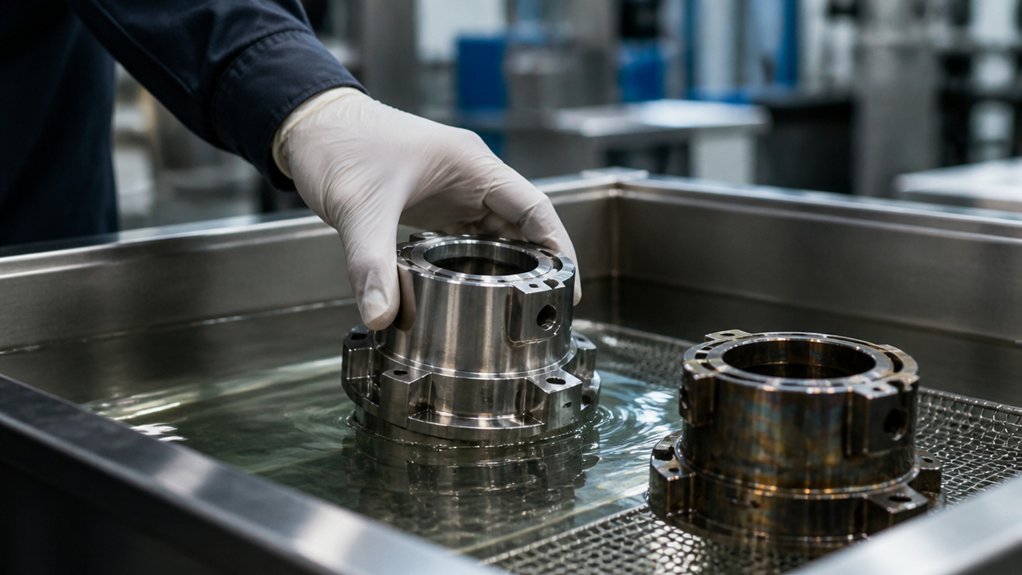
Passivation removes free iron and other surface contamination from stainless steel, helping the chromium in the steel form a thin, protective oxide layer. Free iron is iron on the surface that isn’t part of the stainless steel’s alloy structure. When chromium reacts with oxygen, it forms an oxide film that helps limit corrosion in suitable service conditions.
For fabricated parts, passivation is a chemical treatment, not a coating or a change to the steel’s bulk composition. It can support the corrosion resistance of grades such as 304 and 316 stainless steel, but the right treatment depends on the alloy, the part’s surface condition, and the chemicals and environment it will face. Cleaning is important because oil, dirt, weld residue, or embedded iron can interfere with the process.
Passivation doesn’t polish a surface, plate it with another metal, or repair damage. It won’t reliably remove heat scale, deep scratches, or contamination trapped in crevices. When reviewing a fabrication specification, identify the stainless steel grade, required cleaning and passivation method, and any applicable standard. Also check whether the part’s design, welds, and maintenance plan suit its service environment; passivation can’t make an unsuitable alloy or design corrosion-proof.
When Your Stainless Steel Parts Need Passivation
Specify passivation for stainless steel parts when machining, grinding, welding, or other fabrication may leave free iron or contaminants on the surface, or when a drawing, customer requirement, or governing specification calls for it. Passivation is a chemical treatment that removes free iron and helps the stainless steel form its protective chromium-rich oxide layer; it doesn’t remove weld scale or repair poor surface condition.
Specify passivation when fabrication may leave free iron on stainless steel or when required by the drawing or applicable specification.
The need depends on the stainless steel grade, fabrication steps, required cleanliness, and service environment. For example, machined 304 or 316 parts may need treatment if tooling or handling could transfer iron. Welding can leave heat tint, a colored oxide layer that usually needs separate removal before passivation. Check the part drawing and applicable specification for the required process and acceptance criteria.
Schedule passivation after fabrication, cleaning, and any operation that could contaminate the surface. Complete it before final inspection or assembly if those steps will block access. Ask the supplier to identify the cleaning and passivation methods, how conformance will be verified, and what records will be provided.
Clean parts first to remove oil, scale, and other residues; passivation isn’t a substitute for cleaning. If the surface is clean and no service condition or specification requires treatment, passivation may not be necessary.
How Passivation Helps Stainless Steel Resist Corrosion
Passivation improves corrosion resistance by removing free iron and other contaminants from stainless steel, then supporting formation of a chromium-rich oxide film. This thin protective layer limits corrosion and can reform when exposed to oxygen.
For parts made from grades such as 304 or 316 stainless steel, passivation is a chemical treatment, not a coating. The treatment doesn’t add chromium; it helps the alloy’s chromium form a protective surface film. Its effectiveness depends on the alloy, the part’s condition, the cleaning step, and the service environment.
When briefing a fabricator, specify whether passivation is required after machining, welding, or other work that may leave iron contamination. Ask how the part will be cleaned before treatment, since oil, scale, and shop residues can interfere with the process. The selected procedure should suit the stainless steel grade and part geometry and meet any applicable project specification.
Check that the required finish and verification method are stated in the purchase documents. Passivation doesn’t correct poor material selection, crevices that trap corrosive liquid, or inadequate maintenance.
What Stainless Steel Passivation Can’t Fix
Passivation can’t correct the wrong stainless steel grade, poor welds, or design flaws. It’s a chemical treatment that removes free iron from the surface and helps stainless steel form its protective passive layer; it doesn’t change the alloy or repair damage.
If the service environment exceeds the corrosion or heat limits of the specified grade, select a more suitable alloy or change the process conditions. The right choice depends on the chemicals, temperature, exposure time, and cleaning method. Crevices, stagnant areas, and poor drainage can hold contaminants. Revise the part geometry to reduce those traps rather than relying on passivation.
Passivation also can’t remove mill scale, heat tint, oil, or embedded debris. Mill scale is an oxide layer formed during hot processing; heat tint is oxide discoloration from welding or heating. Clean or descale the surface before passivation, using a method suited to the alloy and finish. For a fabrication brief, specify the stainless steel grade, weld and surface-cleaning requirements, and any geometry that affects drainage. Sealants or nonmetal coatings may suit some service conditions, but they shouldn’t conceal defects in the material, fabrication, or design.
What to Ask Before Ordering Stainless Steel Passivation
Before ordering stainless steel passivation, specify the alloy, part condition, required result, and acceptance checks. Passivation is a chemical treatment that removes free iron and supports the stainless steel’s protective oxide layer; the suitable chemistry depends on the alloy and part geometry.
Tell the processor the grade, such as 304 or 316, and describe machining, welding, heat treatment, and prior cleaning. Ask which cleaning and passivation method is appropriate, and whether it meets the drawing, customer specification, or applicable industry standard. If the requirement names a test, confirm the exact method and how many parts or surfaces will be checked.
Define what records you need, such as inspection results and a certificate of conformance, which states that the work met specified requirements. Explain any blind holes, narrow passages, tight tolerances, or surfaces that must be free of residue. These features can affect chemical access, rinsing, inspection, and the risk of trapped solution.
Confirm turnaround, available capacity, packaging, and handling requirements before shipment. State whether parts need masking, protection from contamination, or traceability through processing. Agree on how the processor will identify and segregate parts so inspection and records remain linked to the correct order.
Frequently Asked Questions
Which Standards Govern Stainless Steel Passivation?
ASTM A967/A967M and ASTM A380/A380M are the main standards for chemical passivation of stainless steel. Passivation is a chemical treatment that removes free iron and other surface contaminants, helping the steel form its protective oxide layer.
ASTM A967/A967M covers chemical passivation treatments and tests for stainless steel parts. ASTM A380/A380M gives guidance on cleaning, descaling, and passivating stainless steel equipment, parts, and systems. The applicable standard depends on the part, alloy, surface condition, and treatment process; neither standard replaces a drawing or purchase specification.
Before production, identify the stainless steel grade and the required passivation method in the purchase documents. Also state any required acceptance tests, such as tests for free iron, because the standards describe options and the customer’s specification may select or add requirements. Ask the supplier to document the process and test results when certification is required.
How Long Does the Passivation Process Take?
Passivation can take from about 30 minutes to several hours, depending on the method, stainless steel grade, surface condition, and contamination. Passivation is a chemical treatment that removes free iron from stainless steel so its chromium-rich protective surface can form.
The treatment time depends on the process specified, such as a nitric-acid or citric-acid bath, and on the part’s geometry and cleanliness. Crevices, weld discoloration, oil, and heavy contamination may require cleaning or other preparation before the passivation step. Rinsing and drying add time to the production schedule.
When briefing a supplier, specify the stainless steel grade, the required passivation method, and any applicable acceptance standard. Ask for records that identify the process and confirm the required checks. Acceptance may include a test for free iron or other surface contamination; the appropriate test depends on the part and the governing specification. Do not treat a fixed soak time as proof that a part is passivated: verify the required surface condition before returning it to service.
Can Passivated Stainless Steel Be Used in Food-Processing Equipment?
Yes. Passivated stainless steel can be used in food-processing equipment when the alloy, surface finish, and cleaning method suit the product and operating conditions. Passivation is a chemical treatment that removes free iron from the surface and helps restore the stainless steel’s protective chromium-oxide layer; it does not add a coating.
The suitable grade depends on exposure to food acids, salt, cleaning chemicals, and heat. Type 304 stainless steel is common in food equipment, while Type 316 may be a better choice where chloride exposure raises the risk of corrosion. These grades are not interchangeable for every process, so specify the actual food and cleaning cycle when selecting material.
Passivation does not replace good surface design or sanitation practices. Ask the fabricator to identify the stainless steel grade, surface finish, weld-cleaning method, and passivation process. Check that joints and crevices can be cleaned, and confirm that the finished equipment meets the food-safety rules and material requirements that apply to its intended use.
How Should Passivated Parts Be Cleaned and Stored?
Clean passivated stainless steel parts with clean water and a nonchloride detergent, then dry them fully before storage. Passivation is a chemical treatment that removes free iron from the surface and helps stainless steel form its protective oxide layer. Chloride cleaners can damage that layer and promote pitting, so check the cleaner’s label and the part’s material requirements.
Use soft, nonabrasive cloths or brushes to avoid scratches, and keep parts away from carbon-steel dust, tools, and work surfaces. Carbon steel can leave iron particles on stainless steel; those particles may rust and contaminate the surface. If a part will contact food, chemicals, or a sterile process, confirm that the cleaning method meets the applicable product and industry requirements.
Store parts in a clean, dry area, separated from other metals and protected from moisture and handling damage. The suitable cleaner, rinse-water quality, and storage method depend on the stainless-steel grade, the passivation process, and the part’s end use. Specify these requirements on the purchase order or inspection plan so the supplier can clean and package the parts accordingly.
How Can Passivation Quality Be Verified?
Verify passivation quality by checking that the stainless steel surface is clean and by using a test suited to the part’s service conditions. Passivation is a chemical treatment that removes free iron from the surface and helps stainless steel form its protective chromium-rich oxide layer.
A water-break test checks for surface contamination: clean water should form a continuous film rather than pull away into droplets. This is a screening check, not proof of corrosion resistance. A copper sulfate test detects free iron by showing a copper deposit on the surface; use it only when the applicable procedure permits it, since the test can stain or contaminate some parts.
For critical parts, specify laboratory testing against the purchase requirements. Free-iron analysis checks for iron left at the surface, while corrosion testing exposes a sample to a defined corrosive environment. The appropriate method depends on the stainless steel grade, passivation process, surface finish, part geometry, and intended service. State the acceptance criteria and test method in the drawing or purchase specification, and require records that identify the tested material and batch.