
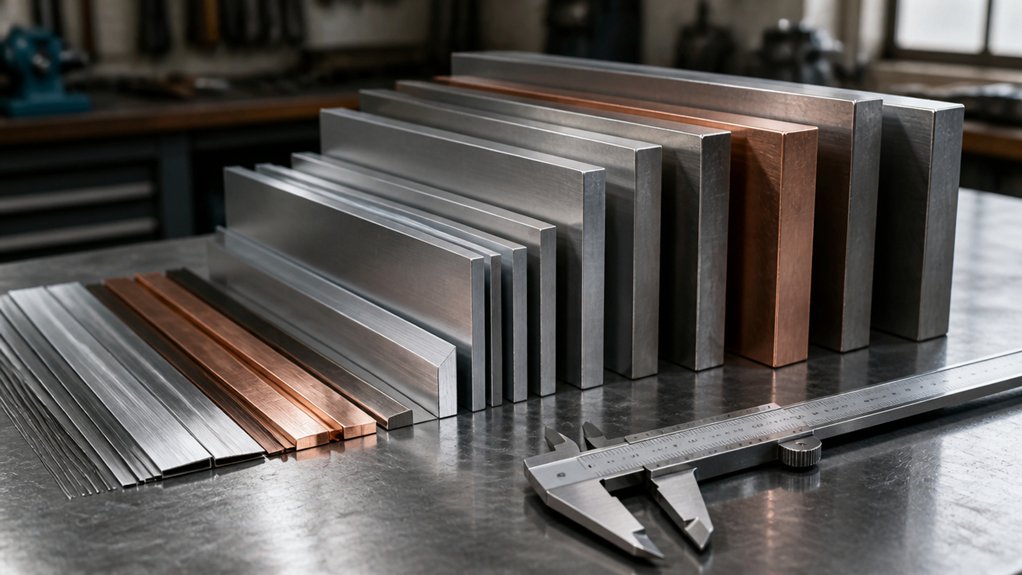
A 16-gauge sheet does not have one universal thickness: the value depends on the metal and the gauge standard. For example, the U.S. standard gauge table published by the Manufacturers’ Standard Gauge for Sheet Steel lists 16-gauge steel at 0.0598 inches (1.52 mm). Do not apply that figure to aluminum or stainless steel without checking the relevant material table.
Gauge is a numbered system for describing sheet thickness; the number alone does not identify a precise dimension. When ordering or reviewing a drawing, specify the material, grade, required thickness in inches (millimetres), and any applicable thickness tolerance. A tolerance is the permitted variation from the specified dimension.
Thickness affects forming as well as fit. In press-brake bending, the required bend radius and force depend on the material’s strength, thickness, tooling, and bend geometry. Confirm the supplier’s thickness specification and the fabricator’s forming requirements before approving a design, especially when parts must fit together or meet a close dimensional tolerance.
What Do Sheet Metal Gauge Numbers Mean?
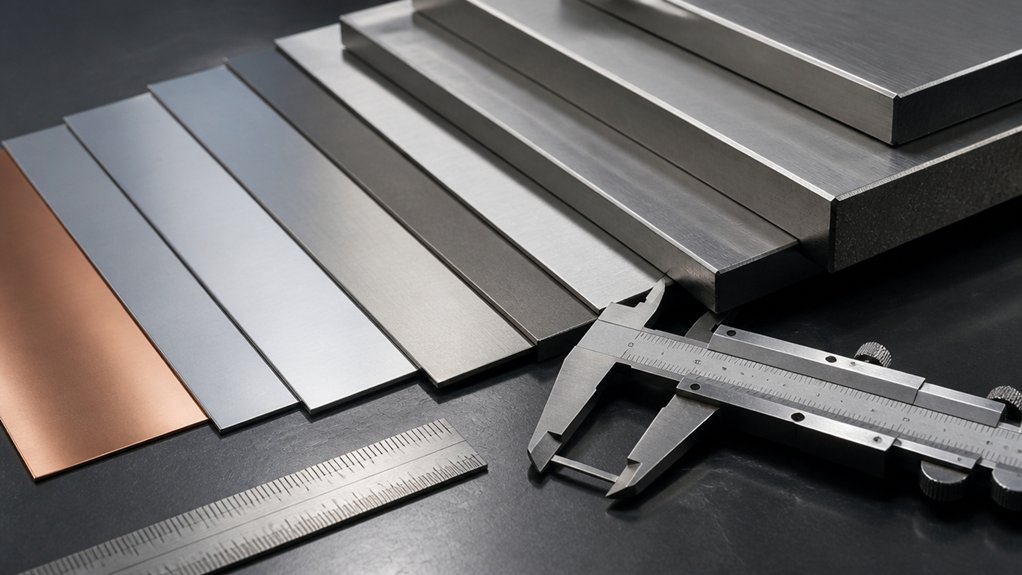
A sheet metal gauge number is a thickness label, not a direct measurement. In most gauge systems, a lower number means thicker metal, but the thickness assigned to that number depends on the metal and the governing standard.
Gauge systems developed from historical manufacturing practices, so they don’t use one universal scale. A gauge step doesn’t represent a fixed change in thickness. For example, the same gauge number can refer to different thicknesses in carbon steel, stainless steel, and aluminum.
When specifying a part for laser cutting, stamping, or bending, name the material and grade, identify the applicable gauge standard, and state the required thickness in inches (millimetres). The grade is the material designation that defines its composition and properties. Use a material-specific conversion table from the relevant standard or supplier data, and confirm that the supplier’s stated thickness matches the drawing. Thickness affects fit, bend behavior, part strength, and material use, so the right specification depends on the part’s function and manufacturing process.
What Is the Sheet Metal Gauge Thickness Chart?
A sheet metal gauge thickness chart lists gauge numbers beside the matching sheet thickness for a named material and gauge standard. It lets a buyer or production engineer translate a drawing’s gauge callout into a dimension in inches (millimetres) for stock selection and inspection.
Gauge thickness depends on the material and the system used. A steel gauge chart, for example, may not give the same thickness as an aluminum chart at the same gauge number. Gauge steps are also not equal increments, so a change of one gauge number doesn’t represent a fixed thickness change.
Before ordering or checking sheet, confirm the chart’s material and standard match the drawing and supplier specification. Record the gauge, material grade, governing standard, and thickness units on purchase orders and inspection documents. For a close-fitting assembly or a process such as press-brake forming, use the specified thickness and supplier data rather than relying on the gauge label alone.
Why Does Gauge Thickness Vary by Metal?
Gauge thickness varies by metal because gauge numbers come from material-specific tables, not one universal thickness scale. A 16-gauge steel sheet and a 16-gauge aluminum sheet can have different thicknesses, so the gauge number alone isn’t a complete specification.
When preparing a drawing or purchase order, name the material and grade, then give the required thickness in inches (millimetres). For example, specify the steel grade and thickness rather than “16-gauge steel.” If a gauge is required by a supplier or an existing drawing, identify the applicable material-specific gauge table and confirm its thickness conversion.
Thickness affects stiffness, weight, forming behavior, and load capacity, but it doesn’t determine them by itself. The result also depends on the alloy or steel grade, part shape, unsupported span, and fabrication process, such as press-brake bending or roll forming. Check fastener and coating compatibility as well, because dissimilar metals can corrode where they meet, depending on the materials and environment.
How Do You Measure Sheet Metal Thickness?
Measure sheet metal with a micrometer or caliper, taking readings on clean, flat areas away from edges, burrs, seams, and surface coatings. A micrometer measures thickness between two contact faces; a caliper uses opposing jaws. Check that the tool sits squarely against both sides, then close it gently until the faces touch the metal.
Measure sheet metal on clean, flat areas with a micrometer or caliper, keeping the tool square and clear of edges and burrs.
Read and record the result in inches (millimetres), using the units marked on the instrument. Take readings at several locations because sheet thickness can vary across a piece. Differences may come from uneven stock, surface texture, or measurement technique.
For coated steel or aluminum, measure the bare metal when the coating can be removed without damaging the sheet. If it cannot, record that the measurement includes paint, plating, or another coating; the coating adds to the overall thickness. State the material and grade, such as carbon steel or 5052 aluminum, along with the measured thickness and units when briefing a fabricator or checking delivered material.
Do not use gauge alone to confirm thickness. Gauge numbers don’t correspond to one universal thickness across metals, so verify the dimension against the material specification or purchase order.
How Do You Choose the Right Sheet Metal Gauge?
Choose sheet metal gauge by matching the specified thickness to the part’s loads, shape, and service environment. Gauge numbers aren’t consistent across metals, so identify the material and gauge standard, then confirm the actual thickness on the supplier’s specification.
Check how the part will be made. For a laser-cut and press-brake-bent part, review the bend radius, tooling limits, and risk of cracking. For a deep-drawn part, check whether the stock can form the required shape without tearing or wrinkling. A bend radius is the inside curve at a bend; the suitable radius depends on the metal, its grade, thickness, and forming process.
Then assess strength, stiffness, and dent resistance against the expected loads and the part’s geometry. Thicker stock may increase rigidity, but it also adds weight and can require more force to cut and form. Account for corrosion, operating temperature, and coatings, since these can affect material choice and service life.
In a purchase specification, state the metal grade, thickness in inches (millimetres), applicable thickness tolerance, finish, and forming requirements. Use a thinner gauge only when calculations or a representative sample support it. If requirements compete, have the design and forming constraints reviewed before production.
Frequently Asked Questions
Can Sheet Metal Gauge Affect a Material’s Weight?
Yes. For the same metal and sheet area, a lower gauge number usually means thicker sheet and greater weight. Gauge is a thickness designation, and its thickness varies by material; a steel gauge value should not be used to estimate aluminum sheet.
Weight depends on the material’s density, thickness and part area. For example, a part cut from thicker 304 stainless steel sheet will generally weigh more than the same shape cut from thinner 304 sheet. Bends and cutouts change the part’s surface area and therefore its weight.
When specifying a part, identify the material grade and required thickness rather than relying on gauge alone. Check the supplier’s material specification or mill certificate, which records the supplied sheet’s grade and thickness, because actual dimensions can vary within the applicable product standard. For shipping or structural-load estimates, use the part’s dimensions and material data; the required accuracy depends on the application and the standard or design requirements that apply.
Does Sheet Metal Gauge Influence Corrosion Resistance?
Sheet thickness affects how much metal remains after corrosion, but it does not by itself determine corrosion resistance. A thicker sheet can provide more material to tolerate gradual metal loss; a thinner sheet has less remaining material if corrosion or surface damage occurs.
The alloy and surface protection matter too. For example, 304 stainless steel resists corrosion through its chromium-rich surface, while galvanized carbon steel relies on a zinc coating; scratches, cut edges, and welds can expose less-protected metal. Salt, moisture, chemicals, and trapped debris can also change how quickly corrosion develops.
When specifying a part, identify the metal grade, sheet thickness, coating or finish, and service environment. For aircraft components, the choice must also meet the applicable airworthiness and design requirements. The right thickness depends on structural loads, expected exposure, maintenance, and the amount of corrosion allowance required—not on gauge alone.
How Does Sheet Metal Gauge Affect Sound Transmission?
Thicker sheet metal usually transmits less sound because it has more mass per unit area, but gauge alone cannot predict how much sound a panel will block. Gauge is a traditional sheet-thickness designation; its thickness varies by metal and, in some cases, by product standard.
For example, compare the specified thicknesses of the actual materials rather than relying only on gauge labels. A larger panel can vibrate more readily than a small one, while stiffening ribs or a different mounting method can change its vibration. Sound transmission also varies with frequency, the number and spacing of supports, and whether the panel is rigidly attached to a frame.
Damping—a layer or treatment that reduces vibration—can limit panel resonance, the tendency of a panel to vibrate strongly at certain frequencies. For a fabrication brief, identify the metal and grade, required thickness, panel dimensions, support locations, attachment method, and any damping treatment. State the sound frequencies or noise source of concern, if known. The appropriate design depends on those conditions and on whether the priority is blocking airborne sound, reducing vibration, or both.
Can Sheet Metal Gauge Affect a Project’s Cost?
Yes. Sheet metal gauge can affect a project’s cost because thickness changes material weight and can alter cutting, forming, joining, and shipping requirements.
Gauge numbers are not consistent across all metals, so specify the material and thickness in inches (millimetres) rather than relying on gauge alone. For example, a drawing can call for 0.060-inch (1.52 mm) 304 stainless steel sheet. The supplier’s material standard or data sheet should confirm the thickness and any permitted variation.
Thicker sheet generally uses more material by weight. It may also require more cutting force or different press-brake tooling for bending; a press brake is a machine that forms sheet metal with a punch and die. The effect depends on the alloy, part geometry, production quantity, and fabrication process.
Ask the supplier to identify the material grade, thickness, and applicable thickness tolerance—the allowed variation from the specified thickness. Check whether the design’s bends, welds, and cut features suit that specification. Material utilization, scrap, finishing, and freight can also affect total project cost.
What Tools Are Used to Cut Different Sheet Metal Gauges?
Hand snips suit thin sheet, powered shears suit many medium-thickness sheets, and plasma or laser cutting can handle thicker plate. The right process depends on the metal’s type and grade, thickness, cut shape, production volume, and required edge quality.
Hand snips cut thin steel or aluminum by shearing the metal between blades. They work for short, simple cuts, but can distort the sheet or leave a rough edge on longer cuts. Powered shears use moving blades to cut straight lines more quickly; the machine’s rated capacity must match the material and thickness.
Plasma cutting uses an electrically formed, high-temperature arc to cut electrically conductive metals such as carbon steel, stainless steel, and aluminum. It is useful for thicker material and complex profiles, though the cut may need cleanup. Laser cutting focuses a beam of light to make precise profiles in sheet and plate; suitability depends on the material, thickness, and machine capacity.
For a production brief, specify the material and grade, thickness, cut dimensions, and edge requirements. Also state whether the cut edge may show heat effects or needs deburring, the removal of sharp edges. Process choice affects cost through setup, cutting speed, material use, and any required finishing.