
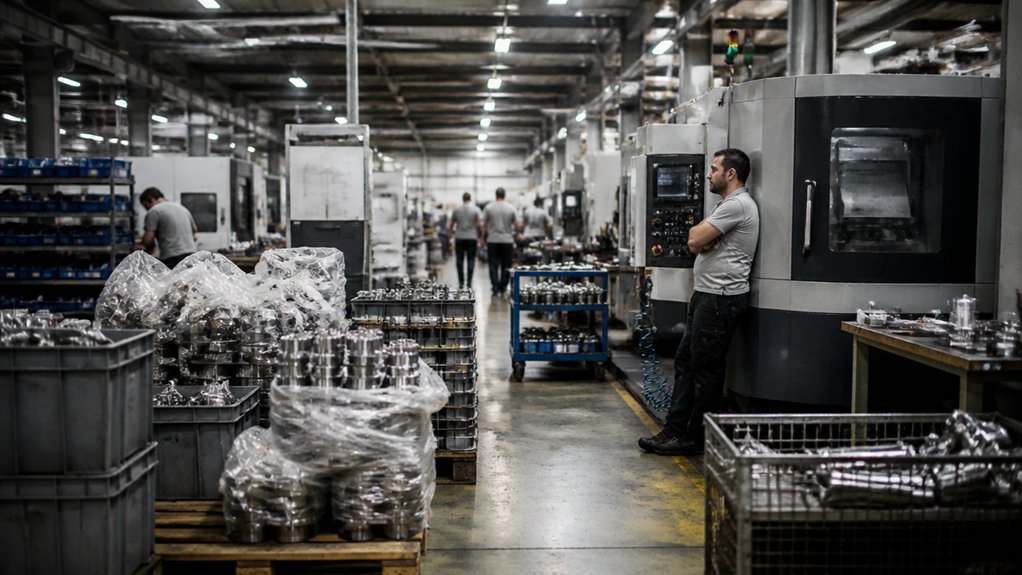
The eight wastes in lean manufacturing are overproduction, waiting, transportation, excess motion, overprocessing, excess inventory, defects, and underused skills. In metal fabrication, they can show up as cutting more blanks than an order needs, leaving a laser cutter idle while material is unavailable, or moving steel plate between distant work areas.
Other examples include unnecessary handling of a welded frame, machining features that the drawing does not require, storing unfinished parts before the next operation, and scrapping a bracket because its holes are misplaced. Underused skills occur when employees’ process knowledge is not used to prevent recurring problems or improve work instructions.
A buyer or production engineer can check for these wastes by comparing the approved drawing and specifications with the routing, inspection records, and actual production sequence. A routing is the planned order of operations, such as laser cutting, press-brake forming, welding, and finishing. Check whether each operation adds a required feature, whether parts wait between steps, and whether inspection results trigger corrective action. The relevant checks depend on the part, material, and process: a welded carbon-steel frame may need different controls from a laser-cut stainless-steel panel.
What Are the 8 Wastes in Lean Manufacturing?
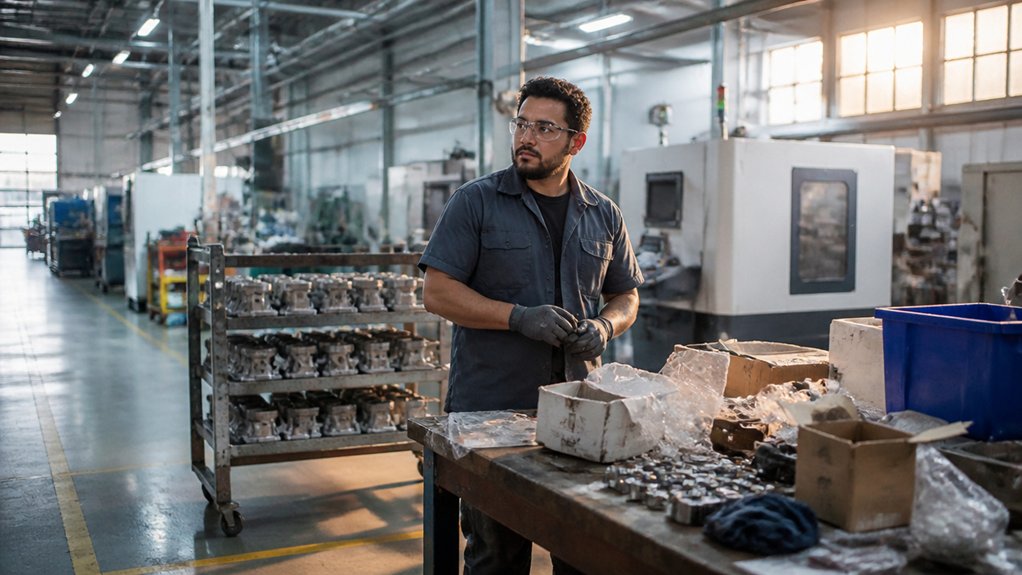
The eight wastes in lean manufacturing are defects, waiting, unnecessary transportation, excess inventory, unnecessary motion, overprocessing, overproduction, and unused talent. They describe work that consumes time, material, or capacity without adding value the customer requires.
In metal fabrication, a defect might be a mislocated hole in a laser-cut mild-steel plate or a weld that fails the drawing’s acceptance criteria. Waiting can occur when a press brake is idle because the cut parts or approved drawings aren’t ready.
Unnecessary transportation and motion include repeatedly moving a batch of 304 stainless-steel parts between cutting, deburring, and welding, or searching for tools. Excess inventory ties up material and floor space; overproduction makes parts before the next operation or customer needs them. Overprocessing includes extra grinding or tighter tolerances than the drawing and function require. Unused talent means not involving operators in identifying recurring setup or quality problems.
To assess waste, compare the drawing, material specification, and inspection requirements with production records. Review scrap, rework, queue time, material movement, and machine setup data. The right improvement depends on part geometry, alloy, thickness, batch size, and required finish. Include operators when reviewing workflow, and check whether changes reduce waste without creating new delays, defects, or excessive material handling.
Overproduction: Making Too Much
Overproduction means making more metal parts than current demand requires or making them before the next operation or customer needs them. For example, producing a full batch of 304 stainless steel brackets before confirming the assembly schedule can leave finished parts occupying storage space and tying up working capital.
In a fabrication brief, state the required quantity, delivery schedule, and whether the order may be released in batches. For laser-cut and press-brake-formed parts, also identify the revision of the drawing and any features that must remain consistent across batches, such as hole locations or bend direction. A drawing revision is the labeled version that defines the part; producing from an outdated revision can make excess parts unusable.
The right batch size depends on demand, setup time, material availability, storage limits, and the cost of changing production runs. Ask the fabricator to distinguish parts already made from material ordered but not yet cut, and to explain how changes to quantity or schedule affect work in progress. Work in progress means parts that have entered production but aren’t yet finished. Check inventory and release dates against actual demand before approving additional production.
Excess Inventory
Excess inventory in metal fabrication is material, work in process, or finished parts that exceed near-term production needs or customer demand. It ties up cash and floor space, adds handling and storage work, and can leave steel plate, aluminum sheet, or completed parts exposed to damage or obsolescence. It can also hide defects and production delays because extra stock makes shortages less visible.
Track raw material, work in process, and finished goods separately. For example, excess 304 stainless steel sheet may point to purchasing quantities that don’t match the production schedule, while piles of laser-cut blanks may indicate a bottleneck at press braking or welding. Set replenishment quantities using actual consumption, supplier lead times, and available storage and production capacity.
Use regular counts and clear labels to identify stock by material, grade, thickness, and job. Compare inventory age and stockouts with inventory turns, a measure of how often stock is used and replaced. Reduce order or batch sizes only when supplier reliability, setup time, and machine changeovers support more frequent replenishment. The right balance depends on the part’s demand, material availability, process sequence, and the consequences of a late delivery.
Early Production
Early production means making metal parts before the next operation or the customer needs them. For example, cutting carbon-steel plate into blanks well before welding can leave parts waiting in storage while the welding schedule or drawing changes. That ties up material, labor, floor space, and machine time without moving the order closer to completion.
For a fabrication order, set release quantities and timing around confirmed demand and the capacity of the next process. A pull signal is a clear instruction from a downstream operation to make or move more parts; it can help prevent excess cutting, forming, or machining. Smaller batches may reduce waiting and limit the number of parts affected by a drawing revision, but the right batch size depends on setup time, material availability, and production sequence.
Check that supplier delivery dates for sheet, plate, or structural steel match the production schedule. In the order documents, identify the material grade, thickness, revision level, and required quantity so purchasing and production use the same requirements. Track completed output against orders and downstream consumption, and revise release plans when demand or the approved drawing changes.
Waiting: When Work Stalls
Waiting in metal fabrication occurs when a part, operator, or machine can’t proceed because the next step isn’t ready. A laser-cut steel plate may sit idle while it waits for a press brake, a welding fixture, a drawing revision, or material inspection. These pauses extend lead time but don’t change the part.
In metal fabrication, waiting occurs when parts, people, or machines pause for the next step, extending lead time without changing the part.
To find delays, map the route from material receipt through cutting, forming, welding, finishing, and inspection. Record where work queues and compare planned with actual start times; a queue is unfinished work waiting for a process. Check whether delays come from unbalanced workloads, machine downtime, missing drawings, late approvals, or material that hasn’t been released for production.
When briefing a fabricator, identify the required material and grade, thickness, quantity, finish, and inspection requirements. State which drawing revision governs the work and how questions about unclear dimensions or weld details should be resolved. The right production sequence depends on the part’s geometry, material, batch size, equipment, and required finish.
When reviewing progress, ask which operation is holding the parts and what must be ready before work can resume. Clear drawings, agreed handoffs, maintained equipment, and timely material checks can prevent avoidable stops. Track recurring delays by operation so the underlying constraint—not just the visible queue—can be addressed.
Transportation: Moving Materials Unnecessarily
Move sheet, plate, bar, and finished parts only as far as the next production step requires. Unnecessary transport adds handling time and can scratch stainless steel, dent aluminum, or damage cut edges without changing the part.
Map the route for each material from receiving through cutting, forming, welding, finishing, and packing. Look for repeated trips between distant storage and machines, backtracking, and transfers to temporary staging areas. The best route depends on the part’s size, weight, process sequence, and the shop’s equipment layout.
Store frequently used stock near the machine that processes it, while keeping space for safe loading and movement. For example, locate carbon-steel plate near the laser or plasma cutter if cutting is its next operation; keep finished parts near the inspection or packing area. Separate materials and parts when contact could cause contamination or surface damage, such as carbon-steel residue on stainless steel. Include forklift access, overhead-crane coverage, and clear aisles in the layout review, since a shorter path isn’t useful if it creates unsafe handling or blocks production.
Excessive Material Movement
Excessive material movement occurs when sheet, plate, bar, or fabricated parts travel farther or more often than the production sequence requires. Each extra transfer uses labor and equipment time, takes up floor space, and can expose parts to dents, scratches, or contamination.
For a metal fabrication job, map the route from receiving through cutting, forming, welding, finishing, and inspection. Compare that route with the approved process plan, which lists the required operations and their order. Extra trips may result from poor workstation layout, oversized batches, missing information, or rework. Rework means correcting a part that doesn’t meet its drawing or specification.
When briefing a fabricator, identify the material grade, thickness, finish, and required operations on the drawing or purchase specification. State which surfaces need protection during handling and whether parts must remain grouped by assembly or order. The best layout and batch size depend on part dimensions, equipment location, production volume, and handling limits.
Check the work by asking for a process route and material-handling plan. Review transfer points, storage locations, and how parts will be identified between operations. Track handling time, transfer count, and damage or rework records to find avoidable movement without weakening required quality or safety controls.
Inefficient Routes
Inefficient routes move metal parts farther than the process requires, adding handling and increasing the chance of damage. Map the path for each part from receiving through cutting, forming, welding, finishing, and inspection, then compare it with the required process sequence. Mark backtracking, crossing traffic, long transfers, and repeated trips.
For a steel part cut from sheet, for example, check whether it can move directly from laser cutting to press-brake forming, then to welding and finishing. A press brake forms sheet metal by bending it; the best route depends on the part’s design, material, thickness, equipment, and required finish. Keep routes clear of forklift lanes and allow safe access to machines, storage, and inspection stations.
Record travel distance, transfer time, and handling frequency before changing the layout. Repeat the measurements afterward to see whether the new route reduces unnecessary movement without creating bottlenecks or unsafe crossings. Include the proposed sequence and any handling or access constraints in the production brief, and ask the fabricator to flag route changes if the order, material, or production volume changes.
Point-of-Use Storage
Point-of-use storage keeps frequently used metal stock, tools, and consumables near the operation that needs them. For a fabrication line, this can mean placing sheet blanks beside a laser cutter, welding wire near a welding station, or drill bits at a drilling machine. Shorter moves reduce handling and the chance of parts being scratched, bent, or mixed up.
Set locations and quantities according to the job sequence and rate of use. Label each storage location with the material or tool name, grade where relevant, and job or part number. For sheet metal, include the specified alloy and temper, such as 5052-H32 aluminum, so workers can distinguish it from similar-looking stock. The right quantity depends on order size, replenishment time, available floor space, and how easily the material can be damaged or contaminated.
Keep tools arranged in the order they’re used, while leaving enough space for safe access and material movement. Use a replenishment signal, such as a marked minimum level, to show when stock needs to be reordered or moved from central storage. Stage only the parts and consumables needed for the current operation; this limits excess work-in-process, meaning items waiting between production steps. Review locations when the product mix, equipment, or process sequence changes.
Motion: Unnecessary Movement at Work
Reduce motion waste by placing metal-fabrication tools, parts, and controls near the point of use and in the order required by the operation. For example, a sheet-metal cutting and bending cell may need blanks, measuring tools, clamps, and formed parts positioned to avoid repeated walking or awkward reaching.
Place tools, parts, and controls in operation order to reduce walking, repeated handling, and awkward reaches.
Observe the work sequence for cutting, welding, forming, or assembly. Note searches, repeated handling, long reaches, and trips between machines. A motion study—a review of the steps and movements in a task—can help identify delays and strain. The best layout depends on the part’s size and weight, the process, machine access, and how often the job runs.
Adjust work surfaces and storage to suit the parts and equipment. Use fixtures, meaning devices that hold a part in position, when they reduce unnecessary handling without obstructing safe access. Keep welding leads, cutting tools, and controls arranged to avoid tangles and unsafe movement. Document the revised setup so operators can follow it consistently.
Check the layout with the people doing the work. Track cycle time, repeated reaches, handling steps, and reported fatigue, then review the setup when the part, process, or equipment changes. These observations can also help a buyer or production engineer clarify layout requirements in a fabrication brief.
Overprocessing: Work Customers Don’t Value
Overprocessing occurs when a metal part receives work that its drawing, contract, or acceptance criteria don’t require. For example, machining a tighter tolerance, polishing a surface that will be hidden, or repeating an inspection can add cost without improving the part’s fit, function, or compliance.
The right level of work depends on the part’s use, material, and specified requirements. A stainless steel bracket with a visible finish may need deburring and surface finishing, while a concealed carbon steel support may need only the finish required for corrosion protection. A tolerance is the permitted variation in a dimension; specify tighter tolerances only where assembly or function depends on them.
When briefing a supplier, identify required dimensions, surface finish, coating, inspection points, and acceptance criteria on the drawing or purchase documents. Ask the supplier to flag any proposed operation that goes beyond those requirements, and review whether it addresses a defined function, safety, or compliance need.
During production review, compare each operation with the approved documents. Remove or simplify steps that add no required value, and track cycle time and defect data to confirm that changes maintain conformance.
Inventory: Excess Stock and Tied-Up Resources
Excess inventory means holding more raw sheet, plate, bar, or tube, work-in-process, or finished metal parts than the production plan requires. It ties up cash and floor space and adds handling, storage, and insurance costs. It can also hide scheduling problems or parts that are no longer needed.
For a fabrication job, set stock levels using the material grade and thickness, the bill of materials, the production schedule, and supplier lead times. A bill of materials is the list of materials and quantities required for a part or assembly. Check that the specified metal is available when cutting, forming, welding, or machining is scheduled; excess stock of the wrong grade or thickness doesn’t protect delivery.
Coordinate replenishment with suppliers, but account for delivery variability and the consequences of a late shipment. Safety stock is extra material held to cover supply or demand changes. Keep it only where that risk justifies the space and cash tied up. Review inventory turns, days on hand, and aging stock; these measures show how quickly material is used and what’s remained unused. Adjust order quantities and release dates without compromising production or delivery commitments.
Defects and Underused Talent: Two More Lean Wastes
Defects in metal fabrication create scrap, rework, extra machine time, and delivery risk. For example, a poorly fitted steel bracket may need cutting and welding again, while a defect in a machined aluminum part may require a replacement blank. The cause can be a drawing error, incorrect material, worn tooling, or a change in a process such as laser cutting or welding.
To reduce defects, specify the material grade, thickness, dimensions, and inspection method on the drawing or purchase order. Define which features are critical and how they should be measured; a tolerance is the permitted variation from a stated dimension. Check that the fabricator’s inspection records cover those requirements, and ask how nonconforming parts are identified and corrected. Track defect and rework records by part or process to see whether corrective actions are working.
Underused talent is also a lean waste: operators may spot recurring problems that production data alone doesn’t explain. Ask how operators can report abnormalities and contribute to reviews of repeat defects. Clear work instructions and cross-training help people follow the approved process and cover different tasks, while leaving room to flag unsafe or inconsistent conditions. The best approach depends on the part, production volume, and risks of the process.
Frequently Asked Questions
How Can Organizations Measure Waste Reduction in Lean Manufacturing?
Measure waste reduction by comparing a documented production baseline with results after a process change, using the same definitions and data-collection methods. For a laser-cut mild-steel part, for example, record the amount of sheet steel scrapped before and after changes to the cutting layout or nesting plan. A baseline is the starting measurement used for comparison.
Track scrap, defects, rework, excess inventory and cycle time. Scrap is material that cannot be used for the intended part; rework is work needed to bring a part back into specification. For each measure, define what counts and whether the result is recorded per part, per batch or per production hour.
Separate the effect of a process change from differences in the work being produced. Compare like-for-like jobs, such as the same part design, material grade and thickness, and note changes in batch size or machine settings. If the product mix varies, report results by part or job type rather than combining them into one figure.
Check that material records and inspection results support the reported change. Lower scrap may not mean less total waste if the process creates more rework, delays or unusable offcuts. Agree on the measures and reporting period before production begins so the buyer and fabricator can review results consistently.
What Tools Help Identify Waste Across Manufacturing Processes?
Use audit checklists, value-stream maps, shop-floor observation, time studies, and Pareto charts to find waste in metal fabrication. A value-stream map shows how work and information move from a purchase order through cutting, forming, welding, finishing, and inspection.
An audit checklist can track whether drawings, material certificates, revision levels, and inspection records are available at each step. During shop-floor observation, follow a specific part, such as a 304 stainless steel bracket, and note waiting, repeated handling, excess movement, rework, or material left between operations. A time study records how long tasks take and how much time parts spend waiting; compare like jobs and account for differences in thickness, geometry, batch size, and required finish.
A Pareto chart ranks problems by frequency or impact, helping teams focus on recurring issues such as weld defects, laser-cut parts awaiting bending, or scrap from incorrect drawing revisions. Use measured production records rather than estimates where possible. The findings can help buyers and engineers clarify the brief: identify the drawing revision, material grade and thickness, critical dimensions, finish, inspection requirements, and who approves changes. The right checks depend on the part’s design, production route, and quality risks.
How Should Teams Prioritize Waste-Reduction Initiatives?
Prioritize waste-reduction initiatives by mapping material and work flow, then ranking the losses that most affect cost, lead time, quality, and safety. In a metal-fabrication shop, trace a part from plate or sheet receiving through cutting, forming, welding, finishing, and inspection. Process mapping means recording each step, handoff, queue, and scrap point so the team can locate avoidable movement, waiting, rework, and material loss.
Use job records to estimate each problem’s effect. For example, compare nesting scrap from laser-cut carbon-steel plate with rework from a misaligned weldment; the better target depends on order mix, material grade and thickness, machine capacity, and customer requirements. Check drawings, revision control, and inspection records before treating defects as process waste, since a design change or unclear specification may be the cause.
Rank actions by expected benefit, effort, and risk. A change to cutting layouts may be practical when parts repeat, while a fixture or welding-sequence change may need engineering review to protect fit and distortion limits. Assign an owner, define a baseline measure such as scrap per completed part or hours of rework, and review results after the change using the same method and production mix.
How Can Employees Be Trained to Identify Waste?
Train employees to identify waste by teaching them to observe each fabrication step, record what happens, and trace problems back to their source. At a laser-cutting workstation, for example, operators can note scrap from poor sheet layout, delays while waiting for material, and extra handling between cutting and deburring. Deburring means removing sharp edges or burrs left by cutting.
Map the process from material receipt through forming, welding, finishing, and inspection. A process map is a simple record of each step, handoff, and wait. Review it with operators and engineers to find repeated work, unnecessary movement, defects, and bottlenecks. The likely sources of waste depend on the part, material, equipment, and production volume.
Use a consistent log to track scrap, rework, waiting time, and material movement. Define each measure so different shifts record it the same way, then review the results regularly. For example, separate scrap caused by a nesting error—the arrangement of parts on a sheet—from scrap caused by a material defect. This helps teams choose a corrective action based on evidence rather than guesswork.
Connect proposed changes to the job’s requirements. A change that reduces scrap must still meet the drawing, material specification, and inspection plan. For a buyer, these records can also clarify how a supplier monitors process problems and verifies that corrective actions work.
How Does Lean Manufacturing Support Sustainability Goals?
Lean manufacturing supports sustainability by reducing material scrap, energy use, and avoidable production steps in metal fabrication. For example, nesting software arranges flat patterns on sheet steel or aluminum to use more of each sheet, while preventive maintenance can reduce energy waste from poorly maintained cutting or forming equipment.
Track scrap by material and process, such as laser cutting, punching, or press braking. Separate reusable offcuts from contaminated or unusable scrap, and record energy and water use where those resources affect production. These measures help identify whether a process change reduces waste or merely shifts it elsewhere.
Environmental criteria can also guide process design, purchasing, and production planning. Compare material grades and forms against the part’s strength, corrosion, and finish requirements; choosing a suitable grade may avoid excess material or unnecessary coatings. The right approach depends on part geometry, production volume, required quality, and available equipment.