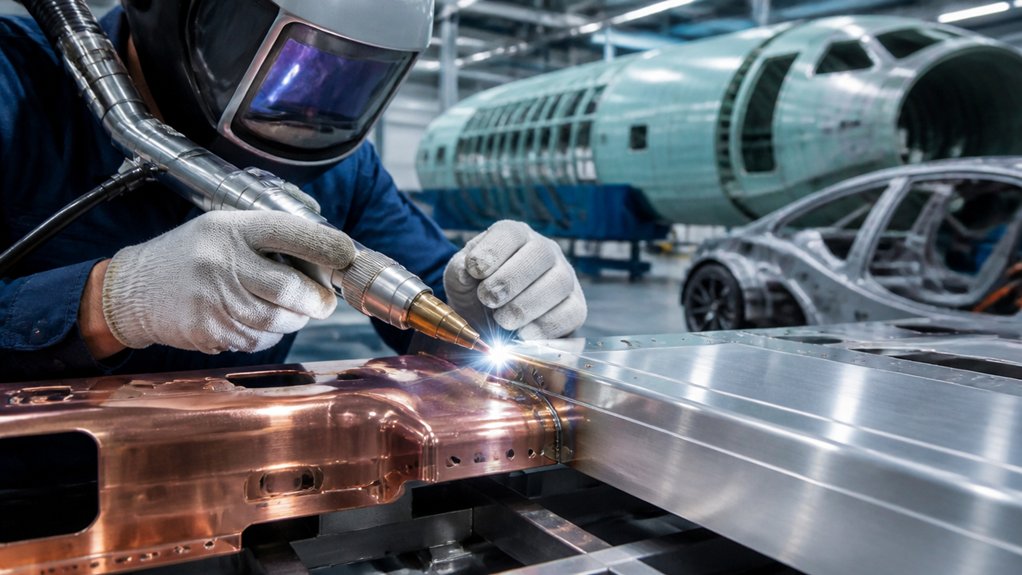
For aluminum-to-steel joints in electric vehicles or aircraft, choose the joining process based on the alloy grades, material thicknesses, load direction, and service environment. Direct fusion welding can create brittle intermetallic compounds—hard, brittle phases that form when aluminum and iron mix—and differences in heat expansion can distort the parts.
Friction stir welding joins metals with a rotating tool that softens and mixes material without melting it. It may suit some aluminum-to-aluminum joints, but aluminum-to-steel joints need a qualified process and tool design to control brittle compounds. Adhesive bonding uses a structural adhesive to transfer load across a prepared surface; fasteners can add mechanical backup. Flow-drill fastening uses a rotating fastener to form a hole in thin sheet, so confirm that the sheet stack and fastener are compatible.
In the drawing and purchase specification, identify each alloy and temper, sheet thickness, joint geometry, and required load. State how surfaces must be cleaned and protected, and specify inspection for gaps, cracks, or incomplete bonding. Ask the fabricator to document the joining procedure and corrosion protection. The choice depends on access, production volume, inspection needs, and exposure to moisture or road salt.
Why Are Dissimilar Metals Hard to Join?
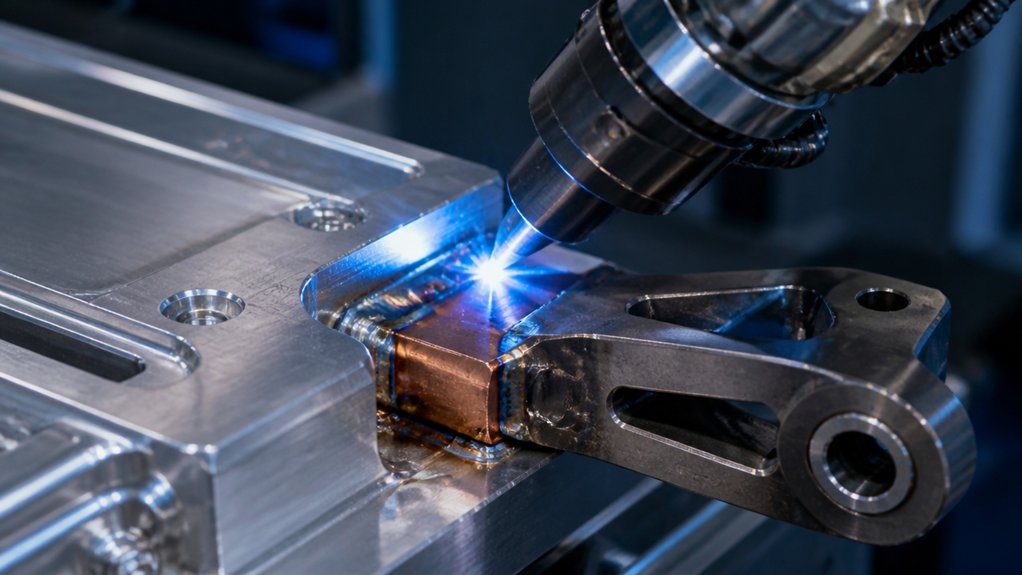
Dissimilar metals are hard to join because their different melting points, heat flow, expansion, and chemistry can make a sound joint difficult to form. For example, welding stainless steel to carbon steel requires a procedure suited to both alloys; the right filler metal and heat input depend on their grades, thicknesses, joint design, and service conditions.
Uneven heating and cooling can distort parts or leave residual stress, meaning locked-in forces that remain after the joint cools. Some metal combinations can also form brittle intermetallic compounds—hard, weak phases where the metals meet. Differences in electrical conductivity and surface oxides can affect how heat flows and how well the joint bonds, especially in resistance welding, which joins parts using electrical current and pressure.
The joining method matters. Welding, brazing (joining with a melted filler metal that doesn’t melt the base metals), and mechanical fastening each create different risks. In a wet or corrosive environment, contact between dissimilar metals can cause galvanic corrosion: electrochemical attack on one metal. Before production, specify the exact alloys, thicknesses, surface condition, joint strength, inspection method, and operating environment. These details help the fabricator select a suitable process and identify whether isolation, a compatible filler, or a qualified welding procedure is needed.
Which Joining Methods Suit EVs and Aircraft?
For EVs and aircraft, select the joining method by alloy combination, joint geometry, production rate, and service loads; there’s no single best process. For thin aluminum-to-steel assemblies, self-piercing rivets or flow-drill screws can join the sheets without melting them. A self-piercing rivet pierces and locks the sheets; a flow-drill screw forms a hole by friction and then threads into the material. Specify sheet thickness, alloy and temper, coating, and access for tooling so the supplier can confirm the joint design.
Adhesive bonding uses a structural adhesive to spread loads and seal the interface. Pair it with mechanical fasteners when the design needs resistance to peeling or retention if the bond is damaged. For battery tabs and compact components, laser welding may suit the geometry, but the process needs qualification for the specific metals because heat can alter the joint or damage nearby parts.
Friction stir welding joins compatible metals with a rotating tool and can reduce melting-related distortion. Brazing joins parts with a filler metal that melts below the base metals; filler choice and heating cycle matter. For aircraft structures, specify approved processes and required inspection, then ask for representative test coupons and evidence that joints meet applicable design requirements. Include expected temperature, vibration, and load cycles in the qualification plan.
Why Do Dissimilar Metal Joints Crack or Corrode?
Dissimilar-metal joints crack or corrode when differences in expansion, strength, or electrochemical behavior create damage at the joint. In a welded joint, metals that expand at different rates can impose repeated strain as the assembly heats and cools. Differences in stiffness—the resistance to bending or stretching—and strength can also concentrate stress near the weld.
Welding some metal combinations can form intermetallic compounds: new phases created when the metals react at the bond line. These compounds may be brittle and provide a path for cracks, especially when the joint also faces vibration, repeated loading, or stress left by welding. The risk depends on the metals, their grades and thicknesses, the welding process, joint geometry, and service conditions.
Corrosion can occur when dissimilar metals touch in an electrolyte, such as rainwater or road salt dissolved in moisture. The more anodic metal—the one more likely to lose electrons—can dissolve faster, particularly when a small area of that metal is connected to a much larger cathodic area. Coatings, gaps that trap moisture, and contaminants can change local conditions and speed attack. Corrosion pits reduce the metal’s effective thickness and can concentrate stress, helping cracks start and grow. Specify the metals, coatings, joint details, and expected exposure when reviewing a fabrication drawing.
How Can You Build Stronger, More Reliable Joints?
Build stronger, more reliable joints by matching the base metals, joining process, and joint design to the loads and service conditions. For example, when joining 304 stainless steel to low-carbon steel, account for differences in corrosion resistance and thermal expansion; the right filler metal and process depend on the joint design and operating environment. Gas tungsten arc welding (GTAW) can provide precise heat control, while gas metal arc welding (GMAW) may suit higher production rates.
Design the joint to transfer loads evenly and limit stress concentrations—areas where force builds up around a change in shape. Use enough overlap for a lap joint, and allow for movement if the parts will face temperature changes. A qualified welding engineer can select a compatible filler metal, such as an appropriate stainless-steel filler, based on the base-metal grades and service conditions.
Prevent galvanic corrosion, which occurs when dissimilar metals electrically connected in a corrosive environment accelerate corrosion of one metal. Specify an insulating layer, coating, or sealant where suitable, and define how surfaces must be cleaned of oil, oxide, and other contaminants. Require the fabricator to document the welding procedure, inspect representative joints, and test samples when the application warrants it. Review inspection results and require corrective action for recurring defects.
Frequently Asked Questions
Which Industries Benefit Most From Dissimilar Metal Joining?
Automotive, aerospace, shipbuilding, energy, and electronics benefit most from dissimilar-metal joining when a part needs properties that one metal cannot provide alone. The right process depends on the metals, joint design, service conditions, and production volume.
In automotive and aerospace parts, joining aluminum to steel or titanium can reduce weight while retaining strength where loads are concentrated. Friction stir welding—a process that joins metals with a rotating tool without melting them—can suit some aluminum joints, but the design must account for differences in expansion, strength, and corrosion behavior.
Shipbuilders may join steel structures to aluminum components to reduce weight above the waterline. Electrical isolation at the joint can help limit galvanic corrosion, which occurs when dissimilar metals in contact corrode in an electrolyte such as seawater. Energy equipment may use nickel alloys joined to stainless steel where heat or corrosion resistance matters; the suitable process depends on the alloy grades and operating environment.
In electronics, copper-to-aluminum joints can connect conductors, but differences in electrical resistance and oxide formation require careful process selection. Buyers and engineers should specify the exact alloys, joint location, loads, environment, inspection method, and required production rate. Material compatibility, tooling, inspection, and any need for transition inserts all affect manufacturing effort.
How Does Joining Dissimilar Metals Affect Manufacturing Costs?
Joining dissimilar metals can increase manufacturing costs because differences in melting point, thermal expansion, and chemical behavior may require specialized processes and added inspection. For example, welding aluminum to steel is difficult because the metals form brittle compounds at the joint; mechanical fastening or a transition insert may be more suitable, depending on the loads, environment, and design.
The joining method affects equipment, labor, and preparation. A bolted joint may need holes, fasteners, and coatings to limit galvanic corrosion, which occurs when dissimilar metals in electrical contact corrode in a conductive environment. Friction stir welding, a solid-state process that joins metals without melting them, may suit some aluminum-to-steel assemblies, but requires specialized equipment and joint design.
Inspection can add cost when the joint is safety-critical or difficult to assess. The required checks depend on the application, governing code, material grades, thicknesses, and specified acceptance criteria. Buyers can help control rework by stating those details in the drawing or purchase specification and confirming the joining method, corrosion protection, and inspection plan before production.
What Quality Certifications Apply to Dissimilar Metal Assemblies?
The certifications for a dissimilar-metal assembly depend on its use, materials, joining process, and buyer requirements. ISO 9001 is a quality management system standard; AS9100 adds requirements for organizations in the aerospace supply chain. Neither standard, by itself, qualifies a specific joint or proves that it meets a design requirement.
For a welded assembly, specify the welding procedure and welder qualifications required by the governing code or contract. A welding procedure specification (WPS) records how the joint is to be made, including the base metals, filler metal, and process. Qualification requirements vary with the materials and the applicable code. For example, welding stainless steel to carbon steel may call for a filler metal selected to suit both alloys and the service conditions.
Require material traceability when the application needs it. Traceability links parts to records such as material test reports, which identify the supplied material and its properties. The purchase specification should state which records, inspections, and approvals are required, including any customer-specific aerospace requirements. For brazed, bolted, or mechanically fastened joints, ask for qualifications and inspection records relevant to that process rather than welding credentials.
Can Dissimilar Metal Joints Be Repaired in the Field?
Some dissimilar-metal joints can be repaired in the field, but repair is suitable only if the materials, joint design, damage, and service conditions are known. For example, a stainless-steel part joined to carbon steel may need a different repair method from an aluminum part joined to steel because heat and corrosion affect each combination differently.
Before work starts, identify each metal and its grade, how the joint was made, and whether it carries a load or contains pressure. The repair plan should specify a compatible process, such as welding or brazing, and an approved procedure for the materials and joint. Brazing joins metals with a filler that melts below the base metals’ melting points; it may be unsuitable where the joint’s service loads or temperature exceed the filler’s limits.
The procedure should address heat input, filler metal, surface preparation, and corrosion protection. Heat input is the energy delivered during welding; controlling it can limit distortion and damage to nearby material. After repair, use inspection and any required pressure or load test to check the joint. The appropriate checks depend on the part’s function, governing code, and consequences of failure.
What Environmental Regulations Affect Dissimilar Metal Fabrication?
Environmental rules for dissimilar-metal fabrication depend on the processes used, the chemicals involved, and the facility’s permits. Welding stainless steel to carbon steel, for example, may produce metal-fume emissions; cutting, grinding, plating, and solvent cleaning can create different air pollutants or waste streams.
The Clean Air Act and state or local air rules may require permits or controls for welding fumes, abrasive blasting, coating, and solvent use. Requirements depend on the process, materials, emissions, and location. A facility should identify the applicable permit limits and keep required operating and emissions records.
The Resource Conservation and Recovery Act governs hazardous waste, including some spent solvents, plating solutions, and metal-bearing residues. Whether a waste is hazardous depends on its contents and regulatory tests, not simply on the metal names. Keep waste streams separate, label containers, and use the required storage and disposal procedures.
For a fabrication job, specify the alloys, coatings, cleaning chemicals, and finishing steps. Ask the supplier to identify expected emissions and waste streams and confirm that its permits and disposal practices cover them. Scrap may be recyclable, but contamination with coatings, oils, or other materials can affect how it must be handled.