
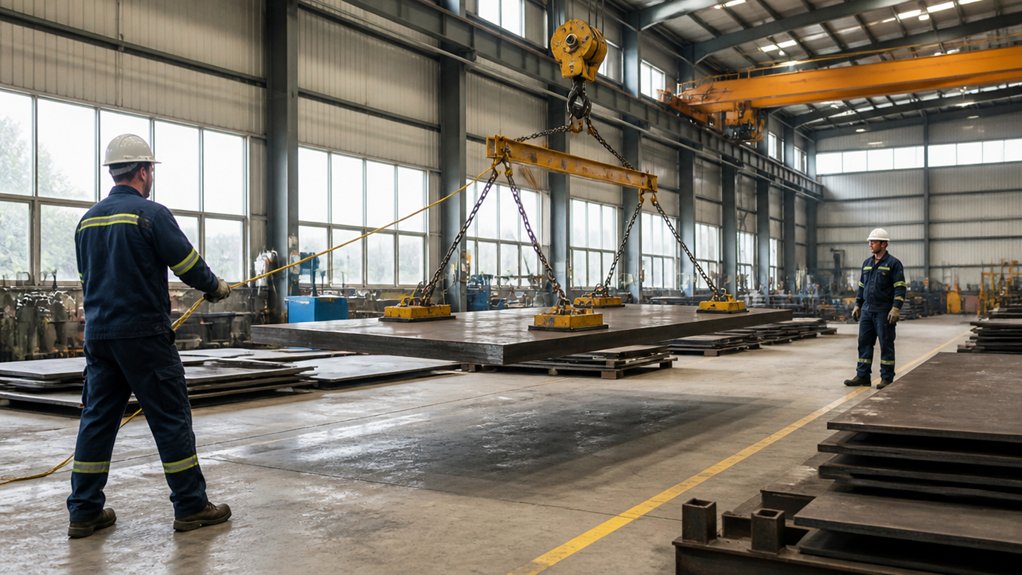
Before lifting heavy plate, verify its weight, dimensions, center of gravity, lifting points, and travel path, then select rigging or a lifting magnet rated for the specific load. The center of gravity is the point where the load balances; if it is offset, the plate can tilt or swing. Confirm the plate’s material and thickness from the job documents, since these affect weight and whether a magnet can hold it securely.
Inspect slings, hooks, and other rigging for damage, and check their rated capacity against the load and the planned lift. A lifting magnet uses magnetic force to hold ferrous steel, but its capacity depends on the plate’s thickness, surface condition, shape, and the manufacturer’s instructions. Do not assume a magnet’s marked capacity applies to every plate.
Keep people out of the fall zone, the area where a dropped load could land, and use agreed signals between the operator and the person directing the lift. Plan a clear route and set the plate down on stable supports. For manual positioning, use mechanical aids where practical and avoid twisting while carrying; the safe method depends on the plate’s size, weight, handling equipment, and workplace procedures.
Assess the Plate and Plan the Lift
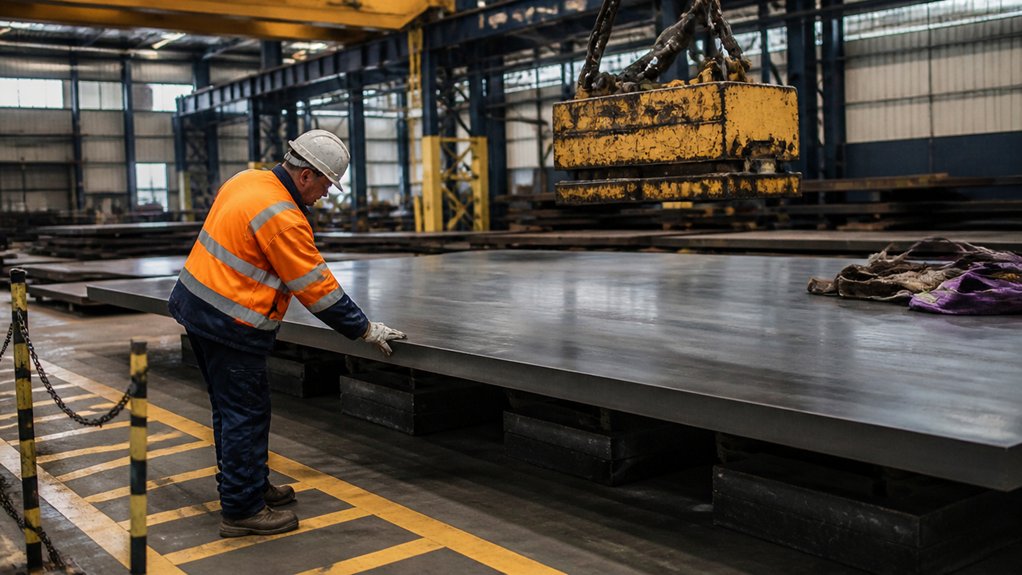
Before a metal plate is lifted, document its weight, dimensions, condition, and center of gravity—the point where its weight is balanced—and confirm the lifting equipment is rated for the load. Use a drawing, material records, markings, or measured dimensions with a verified material density; don’t judge weight by appearance. The required lifting method depends on the plate’s material, thickness, shape, and how securely it can be gripped.
Inspect for sharp edges, corrosion, distortion, loose scale, and oil. These conditions can cause cuts, weaken a grip, or let the plate shift. Check the route and destination for workers, obstructions, uneven floors, overhead equipment, pinch points, and adequate floor support. Confirm the travel path and set-down area are clear and level.
Plan the pickup, travel, and placement in sequence, including how the operator will see the load and communicate with the person directing the lift. Agree on signals and assign one person to direct the move. Keep workers outside the area where a falling or shifting plate could strike them. Stop and reassess if the load, equipment, route, or available information changes.
Choose Rigging for the Plate’s Weight and Shape
Choose slings, chains, or a spreader beam that suit the plate’s weight, dimensions, material, and approved lifting points. Confirm the plate’s center of gravity—the point where its weight balances—and check for damage or distortion before selecting the rigging.
Check the working load limit (WLL), the maximum load a component is rated to carry, for every item in the lifting assembly. The usable capacity can be lower than the marked WLL because of the sling arrangement, hitch type, load distribution, or limits in the manufacturer’s instructions. Ask the rigging supplier or a qualified lifting professional to verify the configuration when those factors are unclear.
A long or flexible plate may need a spreader beam, which keeps sling legs apart, or multiple pick points to reduce bending and help balance the load. The right arrangement depends on the plate’s length, thickness, stiffness, lifting-point locations, and how it will move. Use suitable edge protection where slings touch the plate, and attach hardware only to lifting points approved for the load. Before lifting, verify that connections are secure, the planned load is shared across the rigging, and the plate can move without shifting or hitting nearby equipment.
Select and Inspect a Plate Lifting Magnet
Choose a plate lifting magnet rated for the plate’s weight, dimensions, thickness, steel type, and surface condition. A lifting magnet uses magnetic force to hold a steel plate during handling; its working load limit is the maximum load allowed under specified conditions. Check the manufacturer’s capacity chart for the exact plate and magnet configuration, because capacity can fall on thin, curved, painted, rough, or hot plate. Confirm that the plate material is compatible and that the magnet’s pole faces—the surfaces that contact the plate—can sit flat across the load.
Before each lift, inspect the magnet, suspension eye, handle, indicator, and safety latch. Look for cracks, bending, corrosion, loose parts, damaged cables, or worn pole faces. Clean scale and debris from both contact surfaces, since gaps can reduce holding force. Check the operating mechanism and, for powered models, the battery or power supply. Follow the manufacturer’s inspection, testing, and maintenance instructions, and remove defective equipment from service. The required magnet depends on the plate’s actual condition and the lift arrangement, so don’t rely on a rating that assumes a thicker, flatter, or cleaner plate.
Communicate and Keep Clear of Suspended Plate
Before moving a magnet-lifted steel plate, agree on the lift plan, travel path, landing area, and hand signals with everyone involved. Assign one person to direct the crane or hoist operator, and make sure all workers know the stop signal. Use radios if noise or distance could make spoken instructions unclear.
Keep people outside the plate’s fall zone—the area it could reach if it drops or swings. Clear the travel path and landing area, and check that the supports are stable and suitable for the plate’s weight. The required equipment and exclusion area depend on the plate’s dimensions, weight, magnet capacity, and the lifting-device manufacturer’s instructions.
Move the plate slowly and watch for swinging, shifting, snagging, or loss of magnet contact. Stop if visibility or control becomes uncertain. Never reach under the plate or steady it by hand. Lower it onto the supports, confirm it’s stable, and release the magnet only when the load is secure. If the plate’s weight or magnet capacity is unknown, verify it from the plate information and manufacturer’s data before lifting.
Handle Plate Without Straining Your Body
Position a metal plate with a rated magnet or mechanical lifting aid, not by supporting its weight by hand. A rated aid has a stated working-load limit from its manufacturer; the limit must suit the plate and the way it will be lifted. Keep hands clear of pinch points, and never reach under a suspended plate.
> Use a rated lifting aid suited to the plate and lift, keeping hands clear of pinch points and suspended loads.
Before moving the plate, check the floor, travel path, and nearby equipment for hazards. Plan where the plate will rest, and use stable supports that can carry its weight. The plate’s material, thickness, size, and surface condition affect its weight and how securely a magnet or clamp can hold it.
Once the plate is stable on its supports, use cut-resistant gloves if you need to handle an edge. Keep fingers out from between plates. Stand close, keep your back in a neutral position, and turn by moving your feet rather than twisting your torso. Don’t overreach or pull the plate toward your body.
For coordinated movement, agree on clear signals with coworkers before starting. Use rated clamps or push tools when needed, and follow the site’s lifting procedures. Stop if the plate shifts or the lifting aid appears unstable.
Frequently Asked Questions
What Training or Certification Is Required for Employees Who Operate Lifting Equipment?
Employees who operate lifting equipment need training specific to the equipment and task, plus any certification required by local regulations. Lifting equipment includes forklifts, overhead cranes, hoists and mobile cranes; each has different controls, hazards and operating procedures.
Training should cover the equipment’s safe operating limits, load handling, inspections, hazard recognition and emergency procedures. Operators should demonstrate that they can use the equipment safely, and a qualified person should evaluate their performance. A qualified person is someone with the training and experience needed to assess the work.
Requirements depend on the equipment, the worksite and the rules that apply. In the United States, for example, the Occupational Safety and Health Administration (OSHA) sets operator training and evaluation requirements for powered industrial trucks, including forklifts, under 29 CFR 1910.178. Other equipment may fall under different OSHA rules or state and local requirements. Employers should keep training and evaluation records and arrange refresher training when required or when unsafe operation, changes in equipment or workplace conditions make it necessary.
How Often Should Lifting Equipment Receive a Professional Inspection?
Have lifting equipment inspected by a qualified professional at least once a year, unless applicable regulations, the manufacturer’s instructions, or the equipment’s use require more frequent inspections. The required interval depends on the equipment type, operating conditions, and inspection rules that apply to the workplace.
A professional inspection can identify wear, damage, or defects that routine checks may miss. Keep records of inspection findings and repairs, and follow the manufacturer’s guidance on removing equipment from service when a defect is found.
Professional inspections do not replace pre-use checks by trained operators. Document those checks and report problems promptly; the inspection schedule and recordkeeping requirements depend on the equipment and applicable rules.
What Should Workers Do if a Plate Shifts or Falls During a Lift?
If a plate shifts or falls during a lift, stop the lift, warn nearby workers, and move everyone clear of its path. Do not try to catch, steady, or reposition a suspended plate by hand.
Once the plate is stable, keep people out of the lift area and have a qualified person inspect the lifting equipment and setup. Check the slings, hooks, clamps, and attachment points for damage or incorrect placement. Confirm that the plate’s weight, shape, and center of gravity—the point where its weight is balanced—are accounted for in the rigging plan.
Before lifting again, correct the cause of the shift and verify that the plate is secured against slipping or tipping. The right controls depend on the plate’s dimensions, material, surface condition, lifting points, and the equipment used. Resume only after the lift team agrees the setup is stable and the area is clear.
How Should Heavy Plates Be Stored When They Are Not Being Handled?
Store heavy plates horizontally on a level, engineered rack or floor support unless the plate supplier or rack manufacturer specifies another method. Horizontal storage reduces the risk of a plate tipping or sliding, but the support must carry the plate’s weight without excessive bending or local damage.
Choose the support for the plate material, thickness, dimensions, and total stack weight. A rack’s rated capacity is its manufacturer’s stated maximum load; check that rating against the load and follow the manufacturer’s instructions for loading and anchoring. Keep stacks stable, separate plate grades or sizes where identification matters, and place heavier plates where they can be handled without lifting them over other stock.
Use suitable lifting equipment to move plates, and keep people clear of suspended loads. Leave access for the planned handling method and keep aisles unobstructed. If upright storage is necessary because of space or handling constraints, use a rack designed to restrain plates against tipping and sliding; do not rely on an assumed lean angle for stability.
What Personal Protective Equipment Should Workers Wear When Handling Plate?
Workers handling plate should wear cut-resistant gloves, safety glasses or a face shield, safety-toe boots, and close-fitting clothing. The right glove and eye protection depend on the plate’s material, edge condition, weight, and handling method.
Cut-resistant gloves help protect against sharp edges on steel, aluminum, and other plate, but they do not prevent crushing injuries. Use mechanical lifting equipment and keep hands clear of pinch points when moving heavy or awkward plate. Select gloves that fit securely and do not create an entanglement risk near rotating machinery.
Wear safety glasses with side shields for routine handling. Use a face shield over safety glasses when cutting, grinding, or performing work that can throw chips or sparks. Safety-toe boots protect against dropped plate; choose soles suited to the floor and any oil or water present. Keep sleeves and other clothing snug around machinery.
Use hearing protection when noise from cutting, grinding, or nearby equipment requires it under the employer’s hearing-conservation program. For wet cutting or slurry—a mixture of water and fine material—choose waterproof gloves and eye protection suited to the chemicals in the fluid. Inspect PPE before each task and replace damaged items.