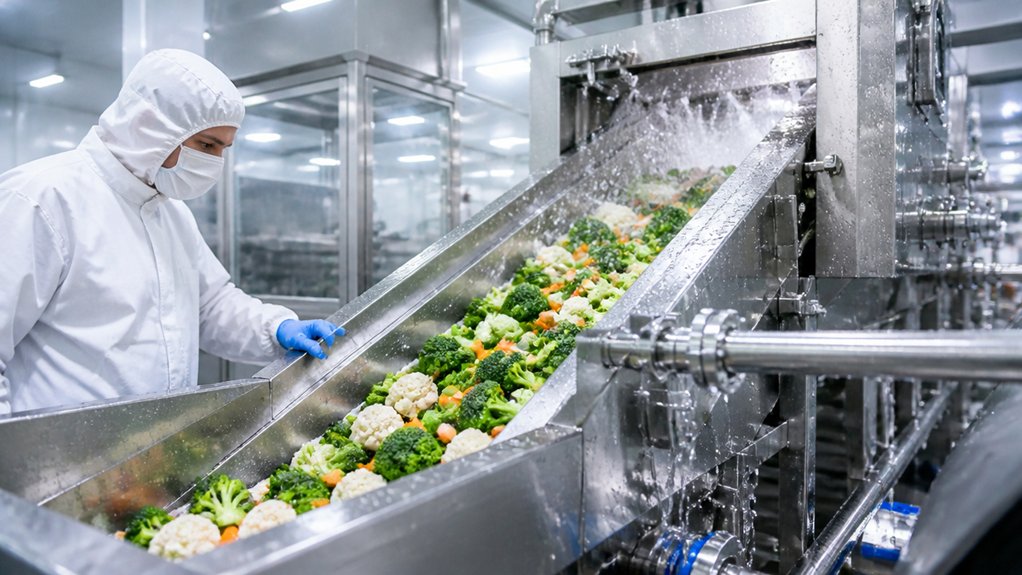
Sanitary equipment helps prevent contamination by using corrosion-resistant stainless steel, cleanable joints, and layouts that drain and can be inspected. For food-contact parts, specify the stainless grade against the product, cleaning chemicals, and operating conditions; 304 and 316 stainless steel are common options, but neither suits every environment. A weld seam is the joint where metal parts meet. Specify continuous, smooth welds in product zones, with no pits or crevices that can trap residue.
Ask the fabricator to identify the welding process and finishing method, such as TIG welding followed by mechanical polishing. TIG, or tungsten inert gas welding, uses an electric arc and a nonconsumable tungsten electrode. The required finish depends on the product and the cleaning method, so do not rely on a surface-finish number unless a relevant standard or equipment specification provides it. Check drawings for slopes, drain locations, and access for cleaning; the correct layout depends on the line and cleaning procedure.
Sanitary fittings connect equipment while allowing cleaning or disassembly, and compatible seals help prevent leaks at those connections. Specify seal material based on food contact, temperature, and cleaning chemicals. Review material certificates, weld and finish requirements, fitting details, and drainage drawings before approving the work. Cost depends on grade, thickness, joint complexity, finishing, and inspection requirements.
What Makes Food Processing Equipment Sanitary?
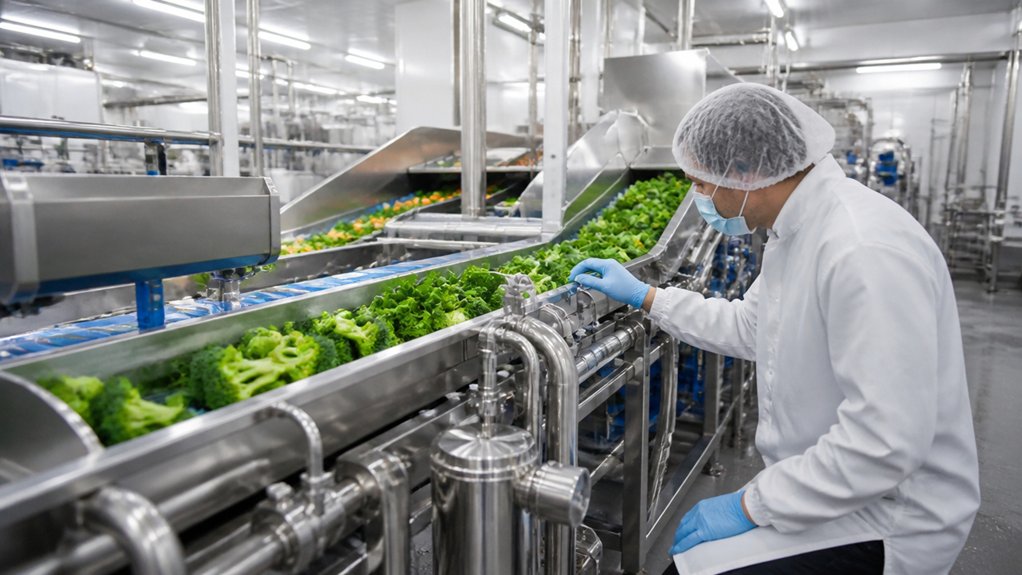
Sanitary food-processing equipment uses corrosion-resistant, nonporous food-contact surfaces, smooth joints, and components that can be cleaned without leaving trapped residue. The right material depends on the product, cleaning chemicals, and operating conditions.
Sanitary equipment relies on corrosion-resistant, nonporous surfaces and smooth joints that clean easily without trapping residue.
For many applications, specify stainless steel such as Type 304 or Type 316, then confirm suitability against the product and sanitation chemicals. Type 316 is often considered where greater corrosion resistance is needed, but neither grade is suitable for every exposure. Ask the fabricator to identify the proposed grade and provide material documentation.
Specify continuous, smooth surfaces and joints that don’t create crevices—narrow gaps where food soil and moisture can collect. The required finish and joint design depend on the product and cleaning method. Include seals, gaskets, and lubricants in the review, and verify that any part that may contact food or migrate into it meets applicable food-contact requirements.
Check the design against the hazard analysis, product characteristics, and sanitation procedures. Request drawings that identify food-contact surfaces, materials, joints, and seals. Set an inspection and replacement plan for wear points, since damaged surfaces or seals can undermine cleanability and allow contamination.
How Hygienic Design Makes Cleaning Easier
Hygienic design makes metal equipment easier to clean by reducing places where soil and wash water can collect. For stainless-steel food-contact parts, specify smooth, continuous surfaces and welds that don’t leave pits or rough edges. A crevice is a narrow gap where residue can remain and cleaning tools or rinse water may not reach.
Specify rounded internal corners, sloped surfaces, and drainable layouts where the process allows. The needed shape depends on the product, cleaning method, and equipment layout; avoid pockets that hold liquid after rinsing.
For welded stainless steel, identify the alloy grade, surface finish, and weld-cleaning requirements on the drawing. The right grade and finish depend on the cleaning chemicals, temperatures, and exposure time; confirm compatibility against the material supplier’s data. If parts must come apart for cleaning, show access and disassembly requirements, and identify any tools or removable components.
Where joints are necessary, specify flush, sealed connections rather than open gaps. Check the finished part for accessible contact surfaces, cleanable welds, and complete drainage, and follow the equipment manufacturer’s cleaning instructions.
How Sanitary Equipment Helps Prevent Contamination
Sanitary equipment helps prevent contamination by limiting places where food residue, moisture, and microbes can collect and spread between products or production stages. For fabricated parts such as tanks, hoppers, and conveyor frames, specify materials and joints that suit the product, cleaning chemicals, and operating conditions.
For food-contact surfaces, 304 or 316 stainless steel may be suitable; the choice depends on the product and exposure to corrosive cleaners. Specify the grade on the drawing and confirm it with material certificates. A smooth surface finish is easier to clean and inspect, but the required finish depends on the process and applicable food-safety requirements. State how the finish will be verified, rather than using “sanitary finish” without a measurable criterion.
Ask the fabricator to identify welds, seams, fasteners, and transitions that could trap soil. Specify continuous, accessible welds where the design requires them, and avoid crevices or hollow sections that can’t be cleaned or drained. Include inspection criteria for scratches, pits, damaged seals, and residue after cleaning. Validate cleaning with representative soils and documented acceptance limits under actual operating conditions. Reassess the procedure when the product, equipment, or process changes.
Which Fittings and Drainage Features Matter?
For food-contact metalwork, specify fittings and drains that allow complete cleaning and inspection without trapped residue or standing liquid. Sanitary clamps use smooth, accessible joints; valves and unions should avoid exposed threads and crevices where product or cleaning chemicals can collect. A dead leg is a branch or pocket where liquid can stagnate. Keep product lines free of dead legs, and make joints removable where inspection or manual cleaning is required.
Name the material and surface finish on the drawing or purchase specification. For example, specify 304 or 316 stainless steel when suitable for the product and cleaning chemistry; the choice depends on corrosion exposure and sanitation requirements. Identify gasket material by compatibility with the product, cleaning agents, and process temperature, using the gasket manufacturer’s data. Require damaged or worn seals to be replaced.
Slope horizontal product-contact surfaces and pipes toward drains, with the required slope taken from the equipment design, applicable code, or project specification. Place drains at low points and size them for the washdown flow so water doesn’t back up. Use removable drain covers that retain solids but can be cleaned. Check low points, joints, and nearby floors after sanitation for pooled water or debris.
How to Apply Hygienic Design Across a Processing Line
Apply hygienic design across a processing line by coordinating equipment layout, product flow, materials, and cleaning access. First, map product, worker, and waste routes, then separate raw-product areas from ready-to-eat areas. This reduces opportunities for cross-contamination, the transfer of harmful material between zones.
Specify equipment positions that leave access for inspection, disassembly, and washdown. Avoid dead ends, product traps, and inaccessible joints where food or soil can collect. For fabricated parts, identify the required metal and grade, such as 304 or 316 stainless steel, based on the product, cleaning chemicals, and operating conditions. State the required surface finish and hygienic connection details in the drawing or purchase specification.
Check that floors and drains direct wash water away from product areas without pooling or spreading contaminants. Coordinate conveyor transitions, tanks, pumps, and drains so the sanitation procedure covers the full product route. Define how cleanability will be verified, including soil removal, rinse coverage, and drying. Confirm the method under actual operating conditions, and document responsibilities and results. Review the layout when products, processes, or equipment change.
Frequently Asked Questions
How Often Should Sanitary Food Processing Equipment Be Inspected?
Inspect sanitary food-processing equipment before each production shift, after cleaning, and whenever damage or a process change could affect food-contact surfaces. These checks can reveal residue, corrosion, worn seals, or damaged welds before they create a contamination risk.
For stainless-steel equipment, include the product-contact surfaces, joints, fittings, and seals in the inspection. Check for cracks, pits, rough welds, and trapped residue; these defects can make cleaning less effective. The required surface finish and inspection method depend on the equipment design, the food being processed, and the cleaning chemicals used.
Record routine checks and corrective actions. Schedule a documented sanitation audit at least annually, and review contamination controls more often when risk assessments, process changes, inspection findings, or applicable regulations call for it. An audit is a structured review of procedures and records, not a substitute for checking equipment during production.
Which Cleaning Agents Are Safe for Stainless Steel Processing Equipment?
For stainless steel processing equipment, use a detergent labeled compatible with the specific stainless grade and a sanitizer approved for the intended food-contact use. A pH-neutral detergent is often a suitable starting point, but soil type, water quality, surface finish, and the equipment maker’s instructions affect the choice.
Hypochlorite can pit or corrode stainless steel if its concentration, contact time, or rinsing is unsuitable. Peracetic acid is another option, but compatibility still depends on its formulation and use conditions. Follow the chemical manufacturer’s label and the equipment manufacturer’s cleaning instructions for dilution, temperature, contact time, and rinsing.
Before approving a cleaning procedure, check that it removes the process residue without damaging welds, crevices, or the finished surface. Ask the chemical supplier to confirm compatibility with the equipment’s stainless grade and any other wetted materials, such as seals or gaskets. Use only sanitizers authorized for the facility and application, and verify whether the label requires a potable-water rinse.
What Certifications Should Food Processing Equipment Meet?
Food processing equipment should meet the sanitation standards and regulatory requirements that apply to its design, materials, and intended use. Common references include NSF/ANSI standards for food equipment, 3-A Sanitary Standards for hygienic design, and applicable U.S. Food and Drug Administration (FDA) rules for food-contact materials.
For fabricated metal parts, check that the specified stainless steel grade and surface finish suit the food, cleaning chemicals, and operating conditions. A certificate for a material or component does not automatically certify the complete machine. Confirm what the certification covers, including the model, parts, and intended application, and verify that it is current with the issuing organization.
Requirements depend on the equipment and where it will be used. A stainless steel conveyor, a mixing vessel, and a food-contact chute may fall under different standards or FDA provisions. In a fabrication brief, identify which surfaces contact food, how the equipment will be cleaned, and which standards or regulations the buyer requires. Also confirm that welds, joints, and fasteners meet the specified hygienic design requirements.
When Should Sanitary Equipment Be Replaced?
Replace sanitary equipment when inspection finds cracks, corrosion, damaged surfaces, or worn seals that cannot be restored to a hygienic condition. These defects can trap food residue or let contaminants enter the product zone, so continued use may increase contamination risk.
Set replacement timing according to the equipment’s material, cleaning chemicals, operating conditions, maintenance history, and applicable food-safety requirements. For stainless-steel equipment, specify the grade and surface finish in the replacement brief; the right choice depends on the product, cleaning process, and exposure to corrosive substances. A fabricator’s drawings should also identify weld locations and surface-finish requirements, since rough or inaccessible areas can make cleaning difficult.
Use inspection records and the equipment manufacturer’s maintenance guidance to decide whether repair remains suitable or replacement is needed. Replace seals when they no longer fit or maintain a hygienic barrier, and replace metal parts when corrosion, cracks, or surface damage cannot be removed without compromising the design. Confirm that replacement equipment meets the applicable food-safety rules for its intended use.
How Can Staff Be Trained to Maintain Hygienic Equipment?
Train operators to clean each machine according to its process, material, and manufacturer’s instructions. For example, a CNC plasma table, a press brake, and a stainless-steel food-processing conveyor have different cleaning needs. Removing metal dust, slag, oil, or cleaning residue helps prevent contamination, corrosion, and equipment faults.
Use a written procedure for each machine. It should identify which parts operators may remove, how to isolate power before cleaning, which cleaners are compatible with surfaces and seals, and how to inspect and reassemble the equipment. Define any required hygiene or contamination controls for the finished part, such as keeping carbon-steel dust away from stainless steel. Follow the machine manual and the relevant material or process requirements; do not assume one cleaning method suits every job.
Give operators a demonstration, then have them perform the procedure while a qualified supervisor checks each step. Use a checklist to record cleaning, inspection, and reassembly, and verify competency at scheduled intervals. Retrain operators when equipment, materials, cleaning products, or procedures change. Keep records so production staff can confirm that equipment was prepared correctly before work begins.