
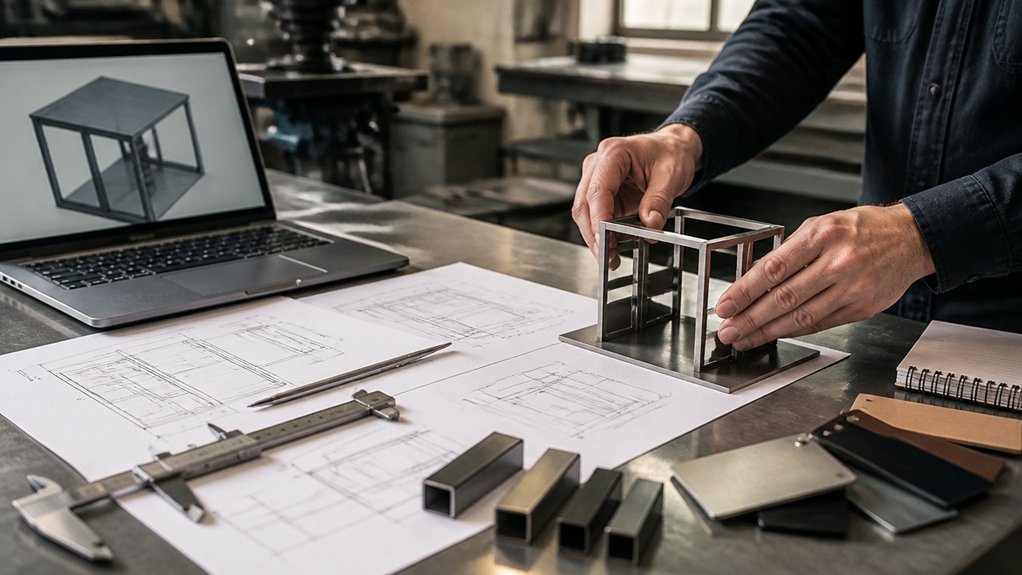
Send a current, dimensioned drawing and a written scope before requesting a metal fabrication quote. The drawing should identify the revision, units, datums (reference points used to locate measurements), critical tolerances, material grade, finish, and quantity. These details help prevent different interpretations of the part and its requirements.
Show hidden features, mating interfaces, and functional requirements in sections, notes, or a 3D model. A mating interface is a surface or feature that must fit or connect with another part. Name the process if it is known, such as laser cutting, press-brake forming, or welding; if it is not known, describe the required result and let the fabricator identify suitable methods.
Specify the material by grade and thickness, such as 304 stainless steel sheet, rather than “stainless.” State whether the finish means a coating, a surface texture, or both. Include delivery location and required date, and list what the quote must cover, such as tooling, inspection, packaging, and shipping. The right tolerances, process, and inspection plan depend on how the part functions, how it mates with other components, and the quantity required.
Prepare Drawings, Dimensions, and Tolerances
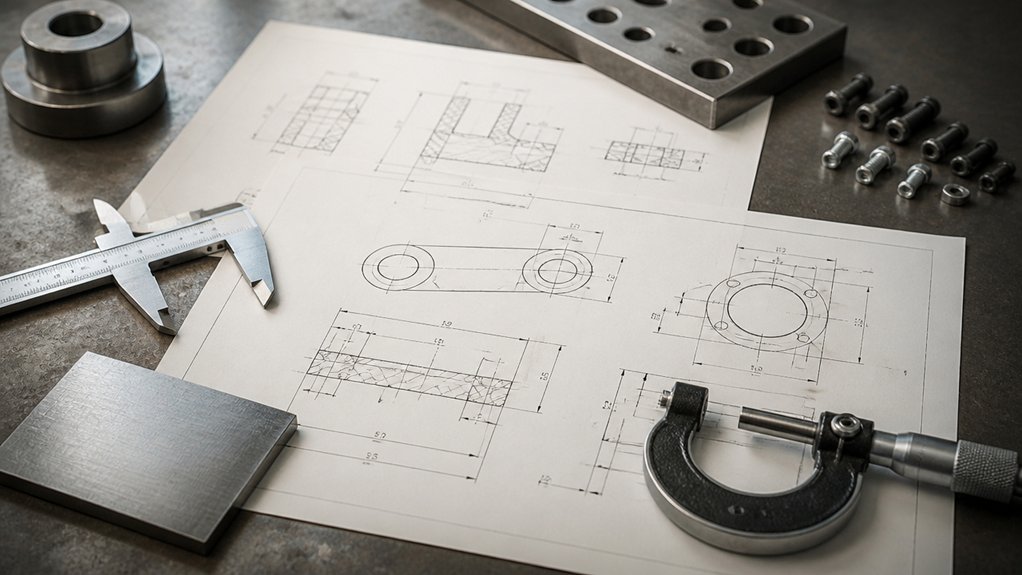
Send a current, dimensioned drawing that defines the part’s shape, size, material, and critical features. A dimensioned drawing is a plan that gives the measurements needed to make and inspect a part. Identify the revision, or version, so the buyer and fabricator can confirm they’re using the same design.
Show hole locations, bends, interfaces, and hidden features with suitable views or sections. State the material grade and thickness, such as 0.125-inch (3.18 mm) 5052-H32 aluminum sheet, when those details are known; if they’re not, mark them for agreement before production. A datum is a reference surface, edge, or point used to locate and measure features. Mark datums for dimensions that control fit or assembly, and explain how those dimensions should be checked.
Set tolerances, the permitted variation from a stated dimension, only where they affect fit, function, or assembly. The required tolerance depends on the process, material, and mating parts, so avoid specifying tighter limits than the design needs. Include mating-part dimensions or interface requirements, plus constraints such as bend direction, finish, or areas that must remain uncoated. Confirm how questions, drawing changes, and production approval will be handled. Before sending the package, check that units, scale, notes, and revision information agree across the drawing and any CAD file.
Specify Materials, Finishes, and Quantities
Specify the metal grade, stock thickness, finish, and quantity for every part number. A grade identifies the material’s composition or properties; for example, name the applicable ASTM or SAE specification and grade rather than writing “steel.” State thickness in inches (millimetres) and identify the product form, such as sheet, plate, or tube. If a supplier specification defines acceptable stock, name it.
Describe each finish and the surfaces it covers. For powder coating, a dry-powder coating cured with heat, specify the color, coverage, and required coating thickness; identify surfaces that must remain bare. State any required material certifications, which document compliance with a named specification. Whether a coating or surface treatment affects fit depends on the part’s dimensions and mating features, so flag critical interfaces on the drawing.
List the quantity for each part number, the total order quantity, and any planned release batches. Separate prototypes, spares, and later production runs from the main order. Clarify whether each quantity refers to individual finished parts or complete assemblies, and include packaging or labeling counts when they affect delivery.
Keep these notes consistent with the drawings and tolerances. A tolerance is the permitted variation in a dimension; check whether stock thickness, coating, or treatment could use up that allowance. Identify permitted material substitutions and require written approval before any change.
Explain the Part’s Use and Requirements
Describe the part’s function, operating environment, and interfaces so the fabricator can judge how to make and inspect it. State what the part connects to, which surfaces or features touch adjacent components, and whether it must carry a load, move, seal against pressure, or resist heat, moisture, chemicals, or abrasion. Explain the difference between routine operation and occasional peak conditions. Note the consequences of failure, such as leakage, misalignment, downtime, or a safety risk.
Identify the dimensions that control fit, alignment, sealing, clearance, or movement. Give dimensions in inches with millimetres in brackets, and identify the drawing or measurement reference surfaces. Set tolerances—the allowed variation in a dimension—according to function: control features that affect assembly or operation, and allow more variation where it doesn’t matter. Don’t assign numeric tolerances without a drawing requirement or a published standard that supports them.
Name the metal, grade, thickness, and fabrication process when known, such as laser cutting, press-brake forming, or welding. Requirements depend on the part’s loads, environment, mating components, and production method. Flag assumptions that could change fabrication or inspection, and state how fit and function will be checked, such as a mating-part check, dimensional inspection, or leak test.
Set Delivery Needs and Confirm Quote Details
Set a required delivery date, shipping destination, and preferred freight method, such as ground freight or a dedicated truck. State whether the order must arrive complete or can ship in stages. Give the fabricator receiving details, including dock hours, liftgate access, unloading equipment, and packaging or labeling requirements. These details affect freight planning and may change how parts are packed.
Ask for a schedule that separates drawing approval, material procurement, fabrication, inspection, and transit. Drawing approval is your sign-off on the production drawings; material procurement is the time needed to obtain the specified metal. Confirm which dates are firm and which depend on material availability or approval. Ask to be notified promptly if a milestone slips, with the cause and a revised delivery date.
Before comparing offers, confirm that each quote covers the same material grade and thickness, fabrication processes, dimensions and tolerances, finish, quantity, packaging, and shipping destination. A tolerance is the permitted variation in a part’s dimensions. Check whether tooling, setup, taxes, or expedited service are excluded or billed separately. Provide any budget limit and request an itemized quote with payment terms, an expiration date, and stated assumptions. Put exclusions and proposed substitutions in writing so the offers can be compared on the same scope.
Frequently Asked Questions
Can I Request a Quote Before My Design Is Finalized?
Yes. A fabricator can provide a preliminary quote before the design is final, but the estimate will depend on how much information is available and which details remain open.
Send the latest drawings, part dimensions, material and grade, thickness, quantity, and intended use. Identify the proposed process, such as laser cutting, press-brake forming, or welding, if it is known. A press brake bends sheet metal; the process can affect part geometry and cost. Mark dimensions as confirmed or provisional, and list assumptions about finishes, holes, welds, and inspection.
Ask the fabricator to separate firm requirements from assumptions and to flag design details that could change the estimate. Cost can depend on material choice, part size, quantity, setup, cutting and forming steps, weld access, finish, and inspection requirements. If the design changes, those factors may need to be reviewed before a final quote.
For a useful comparison, send the same revision of the drawings and specifications to each fabricator. Include a drawing revision date and note any unresolved choices, such as whether a part will use 304 stainless steel or 6061 aluminum. The suitable material depends on the part’s loads, environment, and fabrication requirements.
How Should I Protect Confidential Designs When Contacting a Fabricator?
Protect confidential designs by sharing only the information a fabricator needs to assess the process and make the part. A preliminary brief can describe the metal, material grade, thickness, overall dimensions, quantity, and required process, such as laser cutting or press-brake forming, without revealing unrelated product details.
Before sending drawings or CAD files, confirm who owns the design and whether any patents, licenses, or customer agreements limit disclosure. Ask the fabricator to sign a confidentiality agreement that defines what information is protected, who may access it, and how it may be used or retained.
Mark drawings “Confidential” and include a revision number so recipients can identify the approved version. Share files through a restricted-access method, and remove hidden CAD layers, metadata, or details that are not needed for the work. If the fabricator needs more information to check fit or manufacturability, provide it in stages and record permitted use in writing. The level of detail to share depends on the fabrication process and what is needed to confirm dimensions, material selection, and production feasibility.
Can a Fabricator Help Develop a Prototype?
Yes, a fabricator can help develop a metal prototype by reviewing the design for manufacturability—the ease of making a part with a chosen process. That review can identify features that may be difficult or costly to produce with processes such as laser cutting, press-brake forming, welding, or machining.
To get useful feedback, provide the part’s purpose, drawings or a 3D model, material and grade, thickness, expected production quantity, and operating conditions. For example, specify whether the part calls for 304 stainless steel sheet or 6061-T6 aluminum plate; material choice affects forming, welding, corrosion resistance, and strength. Include critical dimensions and tolerances, meaning the permitted variation from each dimension, and identify which features must fit or function precisely.
Ask the fabricator to state what the prototype work includes: design changes, material sourcing, fabrication, inspection, and revisions. Agree in writing on who owns the drawings and any design changes, how revisions will be approved, and what inspection records will be supplied. The best process and material depend on the part’s geometry, loads, environment, finish, and intended production volume.
What File Formats Can I Send for Drawings and Models?
PDF and DWG files are common formats for 2D drawings, while STEP and IGES files are common for 3D models. A PDF preserves a view of the drawing; DWG is a CAD file that can contain editable geometry. STEP and IGES are neutral 3D exchange formats used to transfer model geometry between different CAD systems.
Choose formats based on the information needed to make and inspect the part. For laser cutting or press-brake forming, send a dimensioned drawing and, when requested, a flat pattern that shows the unfolded sheet-metal shape. For CNC machining, a 3D model can define the part’s shape, but the drawing should still specify dimensions, tolerances, material grade, and surface finish where they matter.
Ask which formats the fabricator’s CAD software accepts and whether it needs native files—the original files from the CAD program. Check that the drawing states units, includes all critical dimensions, and identifies the material, such as 304 stainless steel or 6061 aluminum. Do not rely on a model alone for requirements that are not represented in its geometry.
Should I Contact Multiple Fabricators for the Same Project?
Yes—request quotes from multiple fabricators for the same metal part or assembly. Their available processes, production capacity, lead times, and interpretation of your requirements can differ, so a single quote may not show the full range of workable options.
Give each fabricator the same current drawings, material and grade, thickness, quantity, finish, inspection requirements, and delivery deadline. For example, specify whether a part calls for laser cutting, press-brake forming, or welding; these processes affect equipment needs and scheduling. If a requirement is undecided, identify it as an open question rather than letting each fabricator make a different assumption.
Compare more than the quoted total. Check the proposed process, material substitutions, tolerances (permitted variation in a dimension), tooling or setup assumptions, delivery schedule, and exclusions. Ask each fabricator to flag any drawing details that are unclear or difficult to make. The best choice depends on the part’s complexity, required quality checks, production quantity, and schedule—not simply on which quote is lowest.